
The Houses and Owners of Lea Park/Witley Park
Updated: Jul 14
The most visited entry on this website, by a considerable margin, is the one on Witley Park: https://www.thursleyhistorysociety.org/post/witley-park-1
This article is about the estate, its houses and owners over the past four centuries. Information has come from our own archives, newspaper cuttings and sales particulars supplied by Sue Ranson, Wikipedia, Chat GPT and DiCamillo. Many of the photographs have not been available until now. There is also coverage of the many outlying buildings, farms etc that have been sold over time. This entry inevitably covers similar ground to the article referred to above.
Hidden within the wooded landscape between Godalming and Haslemere, Witley Park is today a private and elusive estate. Behind its gates lies a history that mirrors the changing fortunes of England itself - royal ownership, Victorian ambition, Edwardian extravagance, post-war decline, and 21st-century reinvention. It has been an estate of significance since medieval times when the estate originated as part of the medieval manor of Witley.

Newspaper cuttings showing the enduring fascination of the Witley Park Estate.
Medieval to early modern ownership up to the 18th century
It was originally part of the manor of Witley and held in Domesday times by Norman tenants and later it became Crown property under Edward I. It passed through various aristocratic and gentry hands
17th – early 18th century
Henry Bell owned it in the 17th Century. Then Anthony Smith also in the 17th Century and his family held it until 1763.
Cartaret Webb family (1763 – c late 18thearly 19th century)
By the 18th century it was known as Lea Park and associated with the Carteret Webb family having been acquired by Philip Cartaret Webb (1700 – 1770), who was a notable collector of manuscripts and antiquities who also served as an MP, in 1763. He probably lived in a modest Georgian house but no records of it exists.
John Leech (Leach) (1820s – 1847)

John Leech, was part of the local landed gentry class and at that time the property was known as Lea. He was a trustee of the Agricultural Employment Institution. At the 1832 UK general election, he stood for the Whigs in West Surrey, winning a seat. In Parliament, he argued in favour of the Corn Laws, and for reform of the church, in order to equalise the income of the various bishops. He served until the 1835 UK general election, when he stood down.

William Henry Stone (1878 – 1890)
William Henry Stone (1834 – 1896) was a Victorian politician, merchant, landowner and Member of Parliament for Portsmouth (1865 – 1874). He was also a Justice of the Peace for Surrey and Hampshire. He purchased Lea Park for £47,000 and commissioned a substantial half-timbered Queen Anne-style mansion designed by the architect, Richard William Drew (1834 - 1903), which was completed in 1881. It had 25 bedrooms and established Lea Park as a significant gentleman’s residence. However, he did not live there long and sold the property in 1890 to Colonel Samuel Sandys Davidson (1846 - 1921).


The full sale particulars can be downloaded in the pdf below:
Colonel Samuel Sandys Davidson (1890 – 1904)

Colonel Samuel Sandys Davidson (1846 - 1921) , was a British Army officer, engineer, and inventor best remembered for revolutionising field ventilation and climate control - especially in colonial and military settings during the late 19th century. He, too, held the estate only briefly as he sold it to Whitaker Wright in 1896. It has also been reported that Wright acquired the estate from the Earl of Derby in 1890. Neither can be proved from existing records.


Whitaker Wright (1896 – 1904)

Whitaker Wright (1846 – 1904) was an English financier, mining promoter and company director for one of the largest corporate frauds of the late Victorian era. The fortune that he amassed and lost through speculative ventures is covered in the article referred to above. He died by suicide after being convicted of fraud in 1904. Despite his dubious methods, he was revered in Witley as he had provided a great deal of employment in the local area.
Newspaper report from the New York Times, January 30, 1904 and his grave in All Saints' Church, Witley
He purchased the estate 1896 for £250,000, approximately £27 million in 2019 inflation-adjusted values using the retail price commodity index, and massively enlarged the existing 18th century house. He transformed Lea Park into one of the most extravagant estates in England and acquired adjacent lands amounting to around 9,000 acres at its height. He commissioned the architect, H Paxton Watson who added two wings built of Bargate stone increasing the house to 32 bedrooms and seven reception rooms, 600 workers were employed and he spent over £1 million (approximately £113 million in 2019 values). A wall was constructed to enclose 440 acres closest to the house, and he created three artificial lakes and built the remarkable underwater ballroom and conservatory beneath one lake. Ornamental structures and landscaped grounds were on a grand scale making a statement of wealth and imagination.
Construction of the so-called underwater ballroom which was more likely a smoking room

The decoration was lavish and upstairs rooms had moulded ceilings, oriental carpets, Chinese furniture and Japanese silk pictures. The largest ground floor room was the ballroom, which had a floor area of 2,600 sq ft (240 m2), an oak and walnut dance floor, crystal chandeliers and a theatre stage at one end. At the end of the west wing was a glass-domed conservatory with walls built of Bath stone and at the opposite site of the building, at the end of the east wing was a copper-roofed observatory. The main dining room was 50 ft-long (15 m) and the kitchens were able to cater for up to 400 people. Other ground-floor rooms included a billiards room, a small private hospital and a velodrome. The cellars included underground strongrooms for storing valuable furniture and works of art.
In 1904, his vast estate was broken up and sold, marking the end of its most flamboyant phase in the 20th century. Much of Hindhead, Witley and Thursley Commons including the Devil’s Punch Bowl were purchased by a committee of local residents and passed to the National Trust on 30 December 1905.
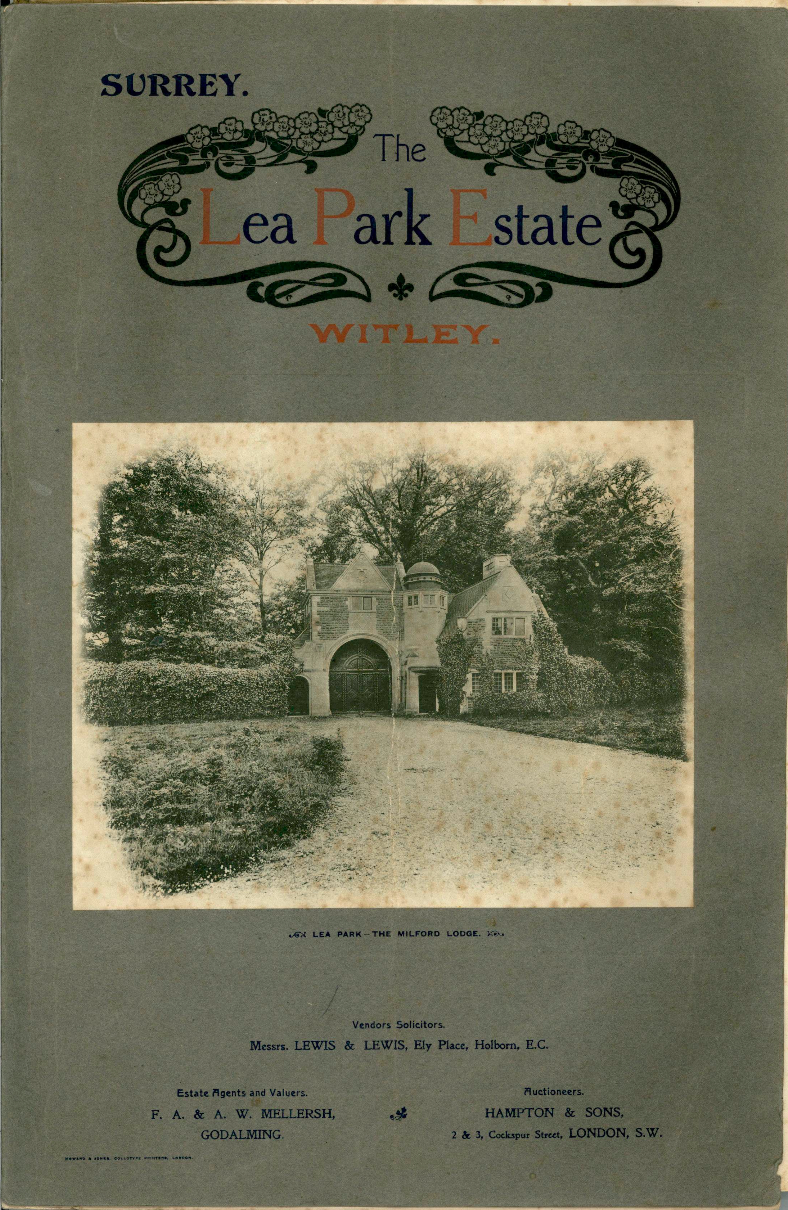


The 20pp sales brochure provides extensive details of the land and properties sold at the 1904 sale:

The fascination about Whitaker Wright has lived long after his death as these articles and book demonstrate:

Transcript of an article that appeared in The Guardian on 2nd February, 2004 and can be downloaded from the pdf below:
The fall of a Midas
From the run-down estates he transformed into a vast palatial home, to his lucrative mining interests, Whitaker Wright seemed t o have a golden touch. Which made the collapse of his empire and trial for fraud all the more spectacular. On the centenary of his conviction, David McKie recalls his most dramatic gesture of all.

Ultimate Folly by Henry Macrory
A gripping story of greed, treachery and ruthless ambition. Few people have led such an extraordinary life as Whitaker Wright. Few have died in such sensational circumstances. Beginning his career as an impoverished preacher, Wright crossed the Atlantic to prospect for gold, surviving a Native American massacre before he made his fortune. Then the bubble burst. Leaving behind a string of angry investors, he fled to England to start again. Soon he was one of the world's richest men. At his 10,000-acre estate in Surrey, he employed an entourage of seventy-seven staff, moved a hill that blocked his view and built an underwater glass smoking room. On his vast steam yacht, he entertained the Prince of Wales, the Kaiser and half of Britain's aristocracy. His downfall was as dramatic as his ascent. On the last trading day of the nineteenth century, his financial empire - which he had propped up by cooking the books - went belly up. This time, the trail of furious investors stretched all the way to the Prime Minister. With the police in hot pursuit, Wright fled to New York, but his escape was short-lived. At the end of what the press dubbed `the most dramatic trial of modern times' he was sentenced to seven years in jail. Minutes later, he sprang a last dreadful surprise... Other great swindlers have followed in Wright's footsteps, but none have surpassed him in daring and shamelessness. Drawing on family papers and archives from around the world, this compelling account of Wright's life reads like a thriller and offers an insight into the mind of the ultimate gambler and conman.
Pirrie Ownership (1909 – 1924)
William James Pirrie , 1st Viscount Pirrie (1847 – 1924), acquired the estate in 1909, renaming it Witley Park and maintaining it as a grand country residence. He was a leading Belfast industrialist and chairman of Harland and Wolff, the shipyard and a director of the White Star Shipping Line that operated the Titanic. His star insignia is still in evidence on many gates around the park. He is best remembered as the benefactor who gave land for the cricket ground at Brook, and had Pirrie Hall built next to it. After his death, the estate was further broken up and sold off in lots marking the end of its era as a single great private estate.


See also the entry for The Temple of the Four Winds:

Interwar Period (1924 – 1951)
Sir John Leigh
Sir John Leigh, 1st Baronet (1884 – 1959) came from a Lancashire family with industrial and landed interests. He was a British mill-owner, newspaper proprietor and Conservative politician. He sat in the House of Commons from 1922 to 1945 as the Member of Parliament (MP) for Clapham. He changed the name to Witley Park, proabably to avoid confusion with his own name, and he preserved the house but made few major changes. The Esated was requisitioned by the Government during the Second World War and sold in May 1952.

Fire, Loss and Reconstruction
On 11th October 1952 a catastrophic fire started in the Great Ballroom and destroyed the mansion. It was demolished shortly afterwards, ending the physical presence of Lea Park House.
Ronald Huggett (1952 – 1955)
Ronald Huggett purchased the estate in 1952 and sold off much of the land and in 1955 he sold it to Gerald Bentall.
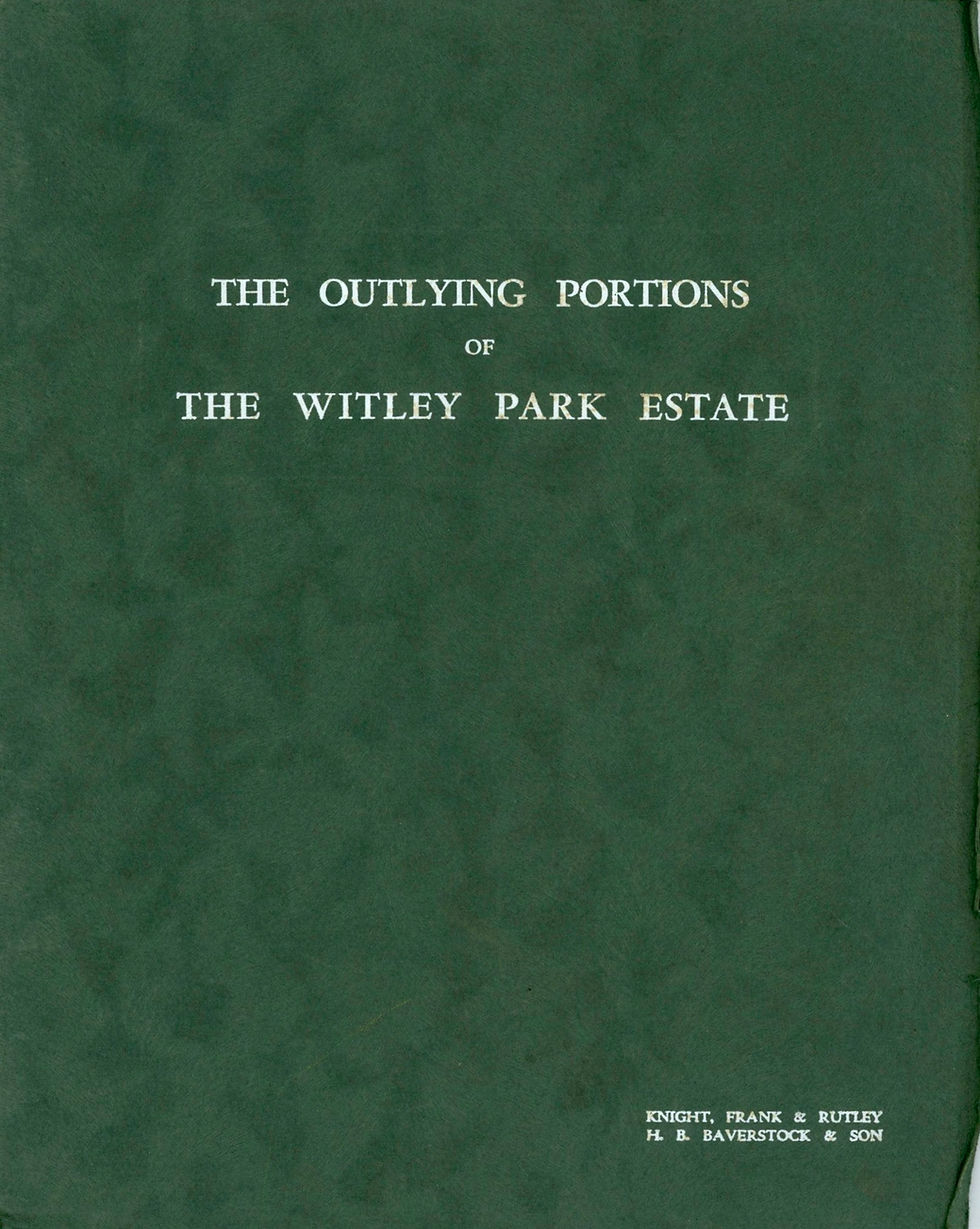


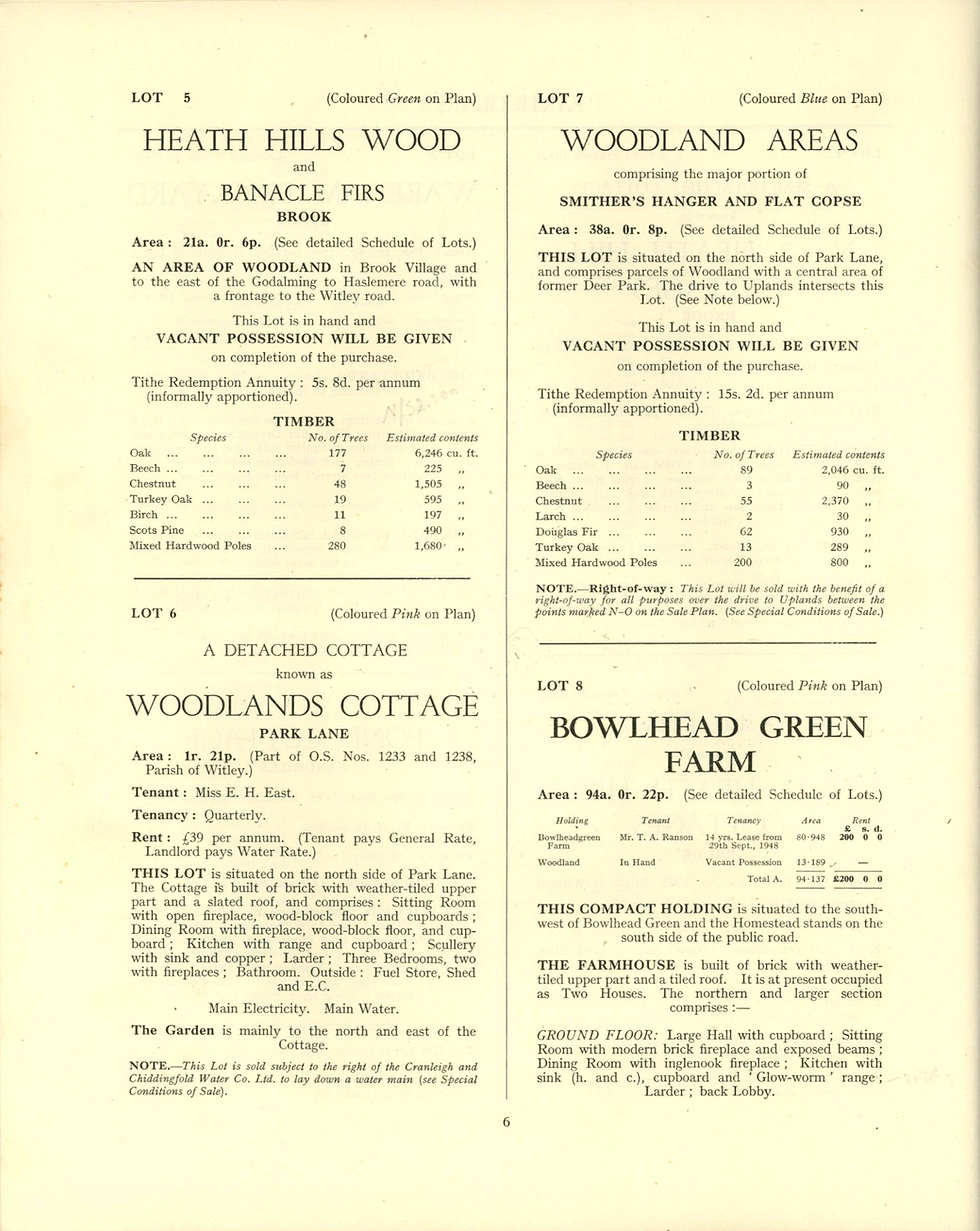

Gerald Bentall (1955 - 1973)

Gerard Bentall (1904 - 1971) farmed the estate and commissioned a new house, Witley Park House, designed by modernist architect Patrick Gwynne and completed in 1962. A new elevated site was chosen, with view towards the South Downs, rather than rebuilding on the original mansion footprint. The plan of the house is a V-shaped arrangement of three interlinked hexagons, with an angle of 120° between the two wings. The focal point of the house is the entrance hall, with a cantilevered staircase in white terrazzo. Together, the living and dining rooms form the hexagonal area at the west end of the house. This marked a shift from Victorian grandeur to modern architectural experimentation. After Bentall died in 1971, the estate was sold by his estate and was acquired by the property developer John Poulson.


Here a just some examples of the photographs that are reproduced in the pdf below:


John Poulson (1973 - 1974)
John Garlick Llewellyn Poulson (1910–1993) is a controversial figure in British history, best known for his role in the Poulson affair, a major corruption scandal that came to light in the early 1970s. His acquisition of Witley Park was part of his wider property dealings during that period. However, his ownership was short-lived. Following his conviction and imprisonment for corruption in 1974, his assets - including Witley Park - were disposed of. There is no clear chain of title as Witley Park passed through a distressed, corporate, and possibly multi-layered disposal process - not a simple private sale.

Ronald Stern (1974 - 1982)

Witley Park was sold by the receivers to Ronald John Henry Stern (born 1949). Stern is a property developer and prominent art and automobile collector who is known for preserving the early history of Ferrari from Enzo Ferrari's early life onwards. He went on to own the estate for a a number of years before being sold to Sir Raymond Brown.


Sir Raymond Brown OBE (1982 – 2002)

Sir Raymond Brown (1920 – 1991) - founder of the construction and waste-management group Raymond Brown Group - acquired the estate – then about 1,300 acres - in 1982, maintaining its privacy and continuity. He lived in the modernist house that was built in 1982 and modified the interior. In 2002, Lady Carol Brown (Sir Raymond’s widow) sold 450 acres of the Witley Park estate, including parkland and lodge, to Gary Steele. She retained parts of the estate finally divesting of it in its entirety in 2002.

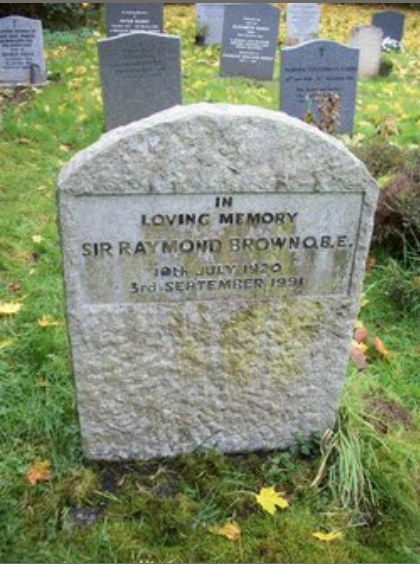

At some point, Witley Park House became Lea House.
Gary Steele (2002 – 2018)

The Architecture was by Adam Architecture 2008 - 2013

John Gary Steele (born 1959) is a British-born cyber security entrepreneur. He acquired part of the estate in 1991 and constructed a new mansion on the original site of the demolished Lea Park House. Steele commissioned the construction of a new, neo-Georgian mansion designed by Robert Adam on the site of Wright's residence. The construction of the new house required major planning negotiations and was one of the more notable uses of “exceptional design” planning permission (aka Gummer's Law) in Surrey. Steele turned the long-ruined site back into a functioning country-seat estate. Unlike previous owners, he kept a low profile.
He sold the estate in 2018 for £30 million.
Oleg Smirnoff (2018 to date)


Oleg Alexandrovich Smirnoff (born 1966) acquired Witley Park with his wife Galina in 2018. His ownership is low-profile and private, with little documented change to the estate. He represents the modern pattern of discreet international ownership of historic English country houses. Subsequent developments have included: further estate restructuring; planning permissions for additions such as a helipad and new structures. The estate remains private and not open to the public.
Evolution of the Estate c1780 to the present

Outlying buildings on the Witley Park Estate
The black and white photographs all come from the 1973 sale brochure


These three pictures above are from an undated magazine article, probably c1990:


