
Lives of the People of Thursley in the 2020s
Updated: Sep 23
Thursley History Society has a long tradition of publishing brief biographies of its villagers as you can discover at the end of this post. Thanks to Tricia Horwood, editor of the Thursley Parish Magazine, we are able to reproduce these lives from a series she is running in the magazine called "A Day in the Life of". We shall continue to update this post until the series is finished.
So far we've had the lives:
Steve Bates, Technology Entrepreneur
Dr Peter Clarkson, Cardiologist
Michelle de Vries, Film & TV Music Supervisor
Gillian Duke, Fine Art Publisher
James Giles, Reserve Manager
Simon Hall, Arborist & Children's Author
Byrony Holloway, Show Jumper
Jerry Horwood, Business Angel
James Maclean, Environmental Engineer and a Chief Operating Officer
James Mendelssohn, Chief Steward at Wimbledon
Revd Hannah Moore, Vicar
Sasha Plaché DeVillers, female electrician
Jason Smith, Director of Commercials
Hugh Semper, Airline Captain
Murray Shepherd, Racing Car Driver
Councillor Phoebe Sullivan
Tim Wakeley, retired Stockbroker
Paul Wedge, Veteran Fencing Champion
David Young, Book Publisher
++++++++++++++++++++++++++++++++++++++++++++++++++++++++++++
Recollections of an old Stockbroker
By Tim Wakeley

Not being bright enough to go to university I was advised by an old family friend of my parents to try and get a job on the Stock Exchange. And so in July 1961 at the age of 17 I enrolled as a clerk in the old established and prestigious stockbroking firm W. Greenwell and Co. There I found myself entering a world of top hats and stiff white collars. After a spell of being a general dogsbody, I was lucky enough to be given an opportunity of becoming an assistant in the private client investment department. It was then that I realised the world of investment with all its challenges was one which most excited and interested me. I went on to qualify as a member of the Society of Investment Analysts and became a partner in 1972 with responsibility for investment management of wealthy private clients, trusts and charities. But things were about to change.
Having peaked in May 1972 a savage bear market saw the FT Index lose 70% of its value by January 1975. This had been caused by a mix of inflation, the 1973 oil crisis, rising interest rates, weak corporate earnings and political uncertainty. Sounds familiar, doesn’t it?!
Many stockbroking and stockjobber businesses failed but those which survived were to be challenged a decade later by ‘Big Bang.’ This brought an end the separation of stockbrokers from stockjobbers and the introduction of electronic trading and allowing foreign firms to own stockbrokers. It also marked the end of gentlemanly hours. Instead of arriving in the office by 9:30 am. Alarm clocks were brought forward by an hour and a half
The changes saw my partnership with Greenwell pass through directorships with Samuel Montagu, Midland Bank and ultimately HSBC from which I retired as Managing Director of HSBC Investment Management in 2003.
Much of my career was spent being involved with investment strategy, asset allocation, stock selection and marketing to larger private and professional bodies such as University Colleges. Livery Companies and Charities.
And so, in retirement what had a lifetime of investment taught me? I can do no better than quote the Sage of Omaha, Warren Buffet. His simple but successful rule is to ‘be fearful when others are greedy and be greedy when others are fearful.’ He also, like me, believes that over any sensible time frame equities will outperform cash.
Today I still keep in touch with many of my old colleagues in the investment world and count myself very lucky that, by sheer chance, I fell into a career which has challenged and rewarded me in so many different ways.
=============================================================
A Day in the Life of a Veteran Fencer
By Paul Wedge

It would be no understatement to say fencing has changed my life. It has given me life-changing experiences, direction and confidence that I would not have had, had I not discovered this wonderful sport.
Fencing was on the programme at the first modern Olympics in Athens in 1896. Though it is a truly international sport, it is considered a minority sport in the UK, with only around 15,000 competitors. Compare this with France, for example, where Fencing accounts for the most Olympic medals won by them in any sport. Indeed, trying to get a ticket for Fencing at the French Olympics was the hottest ticket in the Olympics!
Though it has been modernised and popularised by the Olympics in recent years, it may still seem like a more inaccessible or class-driven sport. So how did a 14 year old boy going to a rough State-School in Manchester get into Fencing?
Well, like a lot of things in life, it was chance and good fortune.
A new teacher called Len Hill joined my school West Hill to teach Chemistry. He also happened to be a very good and respected Professor of Fencing and took it upon himself to initiate us to the sport.
I, along with 7 or 8 other boys, formed a core fencing group.
Early fencing success started almost immediately and was helped at the time by good funding from local education (remember that?!).
I became Cheshire schools’ champion, one of my proudest moments, and then other successes followed both at local Northwest level then at National level. By the time I left secondary school I was twice National Under 20 champion, National Champion, won the Liverpool Open; represented Great Britain at the World Youth Championships in Istanbul and Mexico and won a team gold medal at the Commonwealth Championships in Ontario Canada.
This was a surreal world I had moved into; travelling most weekends either to London or abroad to Europe or occasionally beyond and meeting a wide range of people from all walks of life from upper-class public-school boys, to titled individuals, diplomats and too many nationalities to mention. Quite a journey for a boy from a quiet mill town in Manchester!
The next part of my fencing journey was when I went to university. I initially went to Dundee University to do Dentistry believe it or not! This only lasted 8 months as most Thursdays I would board a train to London and return sometime Monday having fenced in London or returned from overseas. Naturally neither Dundee dental college nor I thought this was a long-term solution and I left Dundee to join Manchester University where I read Business studies and Chemistry.
At this juncture I decided I needed to concentrate on gaining a degree rather than continue to further my fencing career. I had just missed out on the Olympics being the reserve non travelling member and confined myself to university fencing.I became National Universities fencing champion and went to the World Student Games in Sofia Bulgaria which was great fun as it was a mini young person’s Olympics.
After graduating I moved to London and joined Shell who were clearly impressed by my fencing achievements as they normally didn’t recruit from red brick Universities.
Once in London I started to resume my fencing career joining a London club and having lessons from the GB coach. Despite all my efforts I think the effect of a new job, moving, new career and new love life were all sufficient distractions to adversely affect my fencing performance and I started to enjoy it less.

I can still clearly remember, when I was 24, fencing at my club and after a horrible training session zipping up my fencing bag and thinking “that’s it.” I promptly put my fencing bag in the attic, where it stayed for many years. It would have remained there for even longer, had it not been for the London Olympics.
The London Olympics were some 30 years after I had put my fencing bag away, but I wanted to go and watch how the sport had developed. I took my son, Alex, and we promptly joined the throng of people trying to get in. It wasn’t long before I was approached by fencers I knew from my past. Indeed, I met so many people my son asked how I knew them all — he didn’t realise I had fenced before! Watching the fencing was a light bulb moment. Not only was it electrifying as a spectacle, but I realised how much I had missed the sport and the friendships I had previously made.
Shortly after this I decided to restart my fencing journey. To restart, I thought it best to contact my old coach who was Ziemek Wojciechowski who was still the GB National coach. He coached at the Lansdowne club which was not too far from my place in London. I remember going one cold February evening and watching him give a lesson to a fencer. I watched from the sidelines and when they got close to me they suddenly stopped. The fencer being taught took off his mask and promptly said “Wedgy where the Fxxx have you been?”. I had fenced him first as a schoolboy at 14 and throughout my fencing career to its end at 24. He had continued fencing and had competed at three Olympics.
It was as if time had stood still for my 30 year absence and the longevity of the sport continues to amaze me. I am still fencing Tony now some 50 years after we first met. It was the start of an incredible journey. I was now reconnected with fencers I had fought when I was young, who, whilst now older, were still competitive and active. The Lansdowne had a good reputation as a strong veterans club and I was surprised to be informed there was an active, competitive fencing circuit. I remember saying clearly that I would definitely not be competing, but that brings me to the next stage of my fencing journey.

To get match fit involves training and after 30 years of absence took me some time as the muscle groups are specific. I have always trained generally so was fit, but fencing fit is something else. My early sessions were characterised by having to stop mid bout as I thought I would pass out—I forgot to breath and was holding my breath! Muscles would go into spasm, and I remember overtraining one session and being unable to walk for a week! It was a slow journey, but I rediscovered not only my love for the sport but my fitness, speed and flexibility.
Commencing veterans competitive fencing was a reluctant step for me. Firstly, I was scared of failure having achieved so much as a junior and secondly, I wondered if I could compete after so long. Would I have that hunger and desire I had so much of when I was much younger? Veterans fencing is large in Europe. The level is high and at the last Worlds there were over 1000 competitors. Each country keeps upping their game with coaches, physios and masseurs in their teams.
When I first started veterans fencing success came quite quickly and unexpectedly. I qualified for my first veteran’s World’s in Hungary at 59 and off I went with my friends. The first issue when I arrived at the venue was equipment control. All equipment is checked to see that it is safe and has the correct Kite marks. To my surprise my equipment failed! The kit I bought when I restarted fencing was for beginners, so I had the ignominy of having to buy a new kit there and fence without my national colours on my kit! To say that was embarrassing and a schoolboy error would be an understatement and I am often teased about my preparation ahead of a major competition!
My first fight didn’t go well—I lost 5-2 and I thought I would be immediately eliminated. I talked to the opponent who had beaten me easily, Fabio Maraldi, an Italian. He told me I fenced well and that I would be Ok. He then casually informed me he had won the World Championships the previous year! Whilst I got knocked out by another Italian later, my desire and competitive nature to get better kicked in. I decided I needed to apply myself far more fully. I upped my training regime to fencing twice a week with lessons both days and started personalised gym sessions where I would concentrate on power and speed. Flexibility would be improved with regular yoga sessions and easing muscle fatigue would be offset by regular massage. I concluded that if 30 years of absence from fencing had reduced my fencing technical competitive advantage, I should at least aim to be one of the fittest in my category.
I have been incredibly fortunate to rediscover fencing after so long. I have reconnected with old friends and made a huge number of new ones both here in the UK and overseas. When I look back at what fencing has brought me, it’s the friendships and experiences with my fellow fencers that I am most proud of. I have been fortunate to win quite a few competitions since I re-entered fencing as a veteran – four individual World Championships, three World team golds, two European Individual, two European Team, one Commonwealth individual gold, two UK National Championships, and many individual completions in both UK and Europe.

Last year I repeated what I did in my 60’s which I thought I would never achieve again — UK, European, and World Champion all in the same year. Going forward I am still undecided if I will continue to compete, but one thing is for sure, I will still train and fence with my buddies till I can’t!
=============================================================
A Day in the Life of a Technology Entrepreneur
By Steve Bates
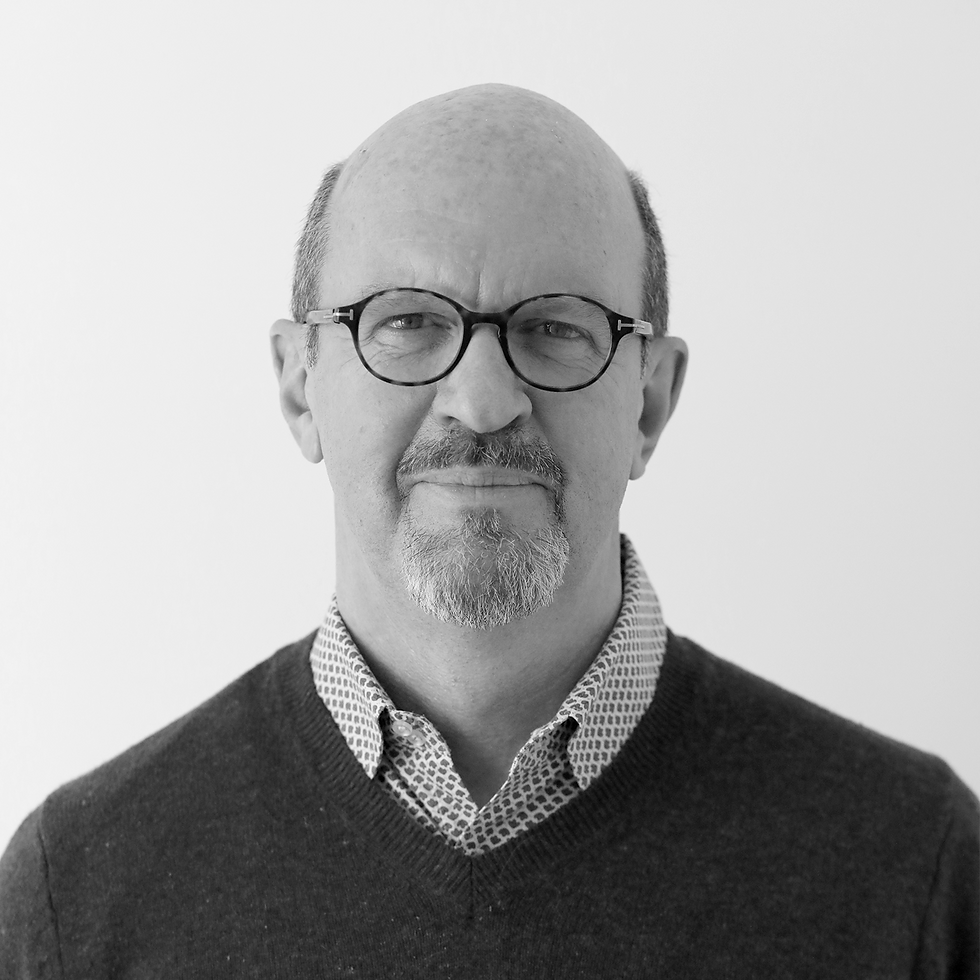
I’ve always been drawn to businesses that make things. To me it’s an obvious way to create value. I never quite understood friends in the City who created value by swapping currencies and then swapping them back again. Surely you haven’t made anything. Where’s the value? I graduated in 1985 as an Engineer and after a decade developing products as a designer for a range of businesses went back to school to get an MBA. My career then followed a technology commercialisation pathway that saw me licensing patents in the US, then helping to develop technology strategies for automotive and aerospace businesses before finally ending up back in London fulfilling a technology strategy role for Marks and Spencer in 1999. I know – quite a leap from space rockets in California to underwear in Baker Street. Over a beer I could explain why they’re actually not so different.
My last ‘corporate role’ was M&S, and whilst I loved the business, the people, and the products – and the children still call it ‘daddy’s shop’ – I was ultimately frustrated by the inability to make more of a difference in a company of that size. That’s not to say the family didn’t all enjoy our years as part of the pudding tasting panel (“Take these sticky toffee creations home and tell us which is better”), and I liked the 20% discount that they forgot to cancel for 5 years after I left. But it wasn’t exciting…
I left in 2004 with a dream of running a technology start-up. There’s another story about how challenging it is to become a CEO when you haven’t already been one, but these pages are supposed to be about what I’m doing now. A day in the life…
Ten years ago, and four companies’ worth of experience gained, I started RHEON LABS, a spin-out from Imperial College in London. We’ve been based in Battersea for the last 7 years in the shadow of the rejuvenated Power Station. How this area has changed since we moved from Kensington – it’s unrecognisable. I bumped into Tim Cook, Apple CEO, in the local deli the other day buying a sandwich. I suppose even the stratospherically wealthy need to eat when they’re visiting their European HQ!
Over the years I have tried to be a good global-citizen and use public transport, but have now given up on our crowded, unreliable, expensive, commuter trains. These days my daily routine involves a 5:30am alarm and a 6:30am departure by car – and I go all the way to Battersea now not just to the station. I’ve gone electric too so I’m no longer waking Peter and Susanne next door with my loud exhaust. Sorry again both of you for all those mornings! So, what does RHEON do?
For the other engineers out there, we are commercialising a non-Newtonian polymer. For everyone else, we’re selling a material with very unusual properties that can add performance to sports equipment, amongst other things, and we’re doing it as an ‘ingredient brand’ like Gore-Tex does in other companies’ clothing. The RHEON material is a soft, rubbery, plastic. You can mould it into shapes, and these shapes can be put, for example, into things like motorcycle clothing or helmets to provide protection. But our soft armour is only soft when you squeeze it slowly. In a high-speed impact it stiffens, absorbs energy and provides unparalleled levels of protection, but it’s immediately soft again when the impact’s over and it can perform this ‘trick’ thousands of times without damage. A few years ago, we won a competition run by the NFL in the US called the Head Health Challenge to find better ways to protect American Footballers’ heads. Remember the Will Smith film, ‘Concussion’? That was our credibility piece in America and now the US is a big market for us.
So how does it work?
Anyone who has mixed cornflour and water will have experienced non-Newtonian behaviour. Stir it slowly and it’s runny: stir it quicker and it seems to resist the spoon. If you run along the beach just where the water touches the sand, it can be glass-hard unlike the soft sand higher up or the sand under the water. What’s happening in all these cases – RHEON included – is an effect called dilatancy, and whilst another dilatant, ‘silly-putty’, was an intriguing children’s toy and a stocking-filler in the 70s, we’ve found a way of making useful things with these characteristics.

Did anyone notice the sprint suits at the Paris Olympics in 2024, or one of the big-city marathons, half-marathons, or one of the world track events? They had a strange Zebra stripe pattern. That’s us. By making our material into a thin film and integrating it into a pair of running shorts, you can control the muscle movements by suppressing the movements that aren’t useful (e.g. leg muscles swinging from side to side) and leaving the useful movements unconstrained. Voila! You’re quicker & less fatigued. Here is the GB 4x100m relay team after winning a medal in Paris in our shorts.

More recently the Australian teenage sensation Gout Gout has been breaking sprint records in our technology. With black-on-red, it’s easier to see too.

We partnered first with Adidas just in time for the Olympics, but now we’ve got a range of other customers. Our innovation is a stretch-textile that stretches slowly, but resists stretching fast and as a result there are a range of things that are now possible.
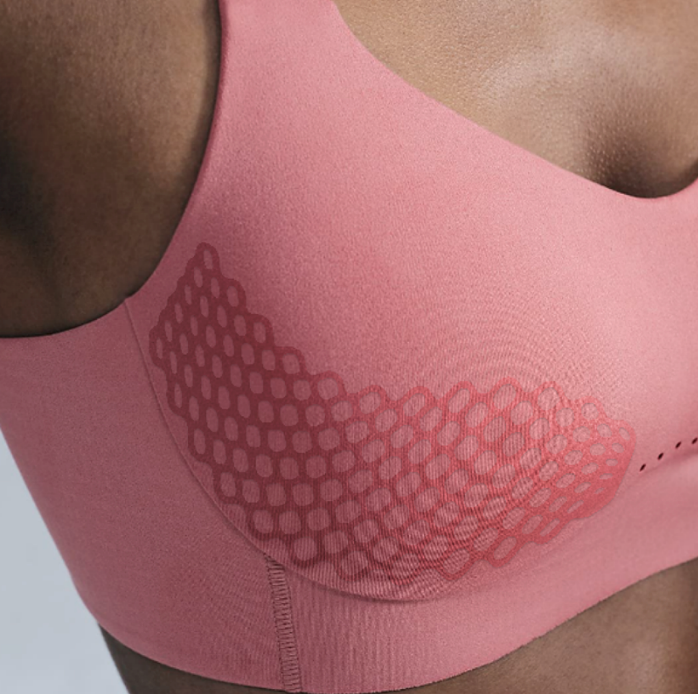
For example, we’re putting that textile into bras. Here stretching slowly equals comfort whereas resisting stretching fast equates to support. So, we can make a running bra with the comfort of a yoga bra.
So, what’s my daily routine. I get to Battersea around 8am with coffee top of the to do list. One of my first capital equipment purchases eight years ago was a proper coffee machine and it’s a rare day that I haven’t downed two flat-whites by 9am! Then my focus is on three things: team, funding, sales. When we started out the technology was still in the labs in Imperial and I perched on a desk in the basement (I had no chair for 6 months!), did everything, and tried to figure out how to commercialise this weird material. Nowadays with 30+ people, a separate team in China and customers I don’t feel quite so exposed. I focus on Team because these are the people that matter nowadays, and the old adage of ‘management by walking about’ remains just as true today (in my view) as it did when I leant this on the factory floor 40 years ago. Funding next, because we are still, just about, pre-profit and need a top-up from investors. And finally, Sales, because I still need to explain and persuade the sports brands we work with to engage and try us out. It involves a lot of travel, but I have a senior team now who share some of the load. I was in the US recently on one of these sales trips visiting some golf brands. Just as we were leaving PING (Phoenix, Arizona if you were wondering) my host asked, “Would you like to see the vault?” I sensed I should know what that meant so replied enthusiastically, “Yes please!”. He swung open the vault door – think Fort Knox – and ushered me into a room with 3,500 solid gold putters. One for every Championship won with PING and with the golfer’s name and date on the putter face. I really love my job – endless surprises.

Currently I am pre-occupied with “What’s next?” and on the same day that I’m writing this I’ve been summarising the 3-5 year growth opportunities we face for a new investor considering coming on board. Spoiler alert – it’s going to be damping vibrations in carbon fibre. Our most recent investors (this potential new one included) want us to start thinking about the market applications outside of sport. We chose sport at the start because it’s a great way to launch a new technology, generate income quickly and establish a name (a brand) that people will then recognise. The fact is that W.L. Gore – who make Gore-Tex – earn 85% of their income from products that don’t carry the Gore brand name. You’ve probably got Gore-Tex in your car headlights for example. Putting RHEON into a mobile phone, or an electric car’s battery, or a wind turbine blade is where we’re going next, but you won’t see the blue RHEON ‘tag’ on any of these. It will make the shareholders happy though. There are big opportunities out there for this material technology.
One thing I love about my job day-to-day is the fact that we still design, make, test, and then design again and all in our Battersea HQ. When you arrive at 1 Broughton Street it looks like a Victorian end terrace – because it is – but inside it’s rather different now. A few doors down is where they filmed, “My Beautiful Laundrette”, a delightful 1985 film about entrepreneurship which feels rather appropriate. Our front room has gone and now there are electric gates that open to let you drive through the ‘living room’into a courtyard behind to access our other building, the converted workshops of Battersea’s former bread-factory. We have something of an Aladdin’s cave in these two buildings with our ground floor given over to a polymer lab and factory scale machinery that we use as part of the design and development process that proves products before we commission volume production in Asia. Upstairs in the terraced house are our meeting rooms where today we hosted Fly, a US Supercross brand (off-road motorcycle racing if you were wondering) who were visiting from Idaho. Downstairs there’s a small gym where we develop products and get some exercise when it’s not being used as a laboratory. I finished the day today by walking around the workshop again to thank the team for putting on a great show for Fly and I remembered again why I do this: I still like making things. The drive home was another rainy one. The New Year’s biblical conditions continue. But as always on a Friday I was entertained by the Radio 4 News Quiz and its irreverent humour – it’s not been a good week for Andrew, formerly known as “Prince” – before I returned to the calm of Thursley and a Friday-night glass of red. Despite the inevitable stress that sits alongside the fun in this job, I do like what I do. And tomorrow’s Saturday so I’ll be putting on some RHEON shorts and going for a run. into a courtyard behind to access our other building, the converted workshops of Battersea’s former bread-factory. We have something of an Aladdin’s cave in these two buildings with our ground floor given over to a polymer lab and factory scale machinery that we use as part of the design and development process that proves products before we commission volume production in Asia. Upstairs in the terraced house are our meeting rooms where today we hosted Fly, a US Supercross brand (off-road motorcycle racing if you were wondering) who were visiting from Idaho. Downstairs there’s a small gym where we develop products and get some exercise when it’s not being used as a laboratory. I finished the day today by walking around the workshop again to thank the team for putting on a great show for Fly and I remembered again why I do this: I still like making things. The drive home was another rainy one. The New Year’s biblical conditions continue. But as always on a Friday I was entertained by the Radio 4 News Quiz and its irreverent humour – it’s not been a good week for Andrew, formerly known as “Prince” – before I returned to the calm of Thursley and a Friday-night glass of red. Despite the inevitable stress that sits alongside the fun in this job, I do like what I do. And tomorrow’s Saturday so I’ll be putting on some RHEON shorts and going for a run.
============================================================
A Day in the Life of a female electrician
By Sasha Plaché DeVilliers
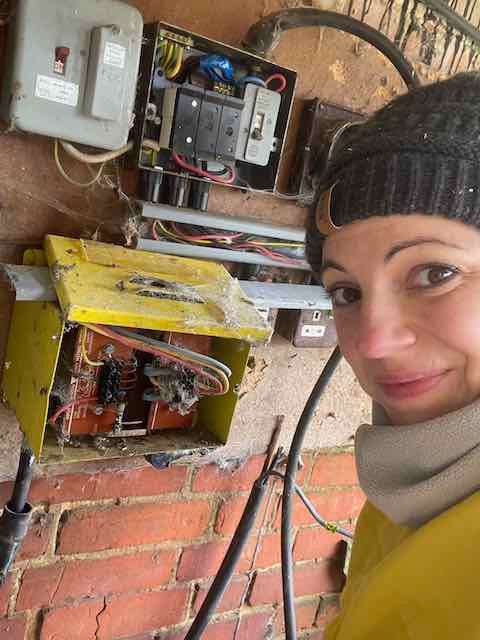
Wiring My Way Through Life (Without Setting Anything on Fire)
I didn’t grow up announcing, “One day I shall be an electrician.” I sort of… tripped over a cable and ended up here.
From primary school age, I was already poking around in my dad’s electronics design and manufacturing business. Factory visits, client meetings, helping out when it was safe — electronics were just part of life. One of my earliest lightbulb moments (literally) happened at St Hilary’s School in Godalming, where I built my very first lighting circuit. A simple LED, a battery, and a switch made from cardboard, foil, and wire. It felt like magic. That moment lodged itself in my brain and never really left. Turns out, that scrappy little circuit was the start of everything.

Childhood: Curiosity Encouraged (and Mildly Dangerous)
I grew up surrounded by engineering, amusement parks, and a dad whose motto was essentially “have a go.” My brother and I had total freedom to invent. We built chicken runs, rewired speakers, dismantled old tech, and rebuilt it into something “better”!
School holidays were the highlight. While other kids were watching telly, I was glued to builders, electricians, and tradespeople, firing off questions like a tiny interrogator: Why that? How does that work? What happens if you don’t do it like that? I also collected a respectable number of scars and a cracked tooth or two along the way. I was the naughty one — the one who thought she knew better and didn’t always wait for adult supervision. Character building, apparently.
Becoming an Electrician (To No One’s Surprise)
When I decided to train as an electrician, everyone nodded knowingly. No gasps, no raised eyebrows. I was always destined for something practical… or a life on stage singing and dancing. Either way, both involve cables and a lot of commitment!
College was refreshingly positive. I didn’t experience negativity for being female — quite the opposite, actually. There was support, encouragement, and the occasional moment of surprise. I am, after all, a youthful-looking, petite 5’2”, feminine-framed person in a job usually associated with someone who looks like they wrestle pythons for fun.
There’s always judgment from fellow electricians and trades who often misjudge my qualification status and skill levels. Many people don’t realise I’ve been doing it since I was 8 years old and therefore more qualified and experienced than most. Challenging the norm has become a part of my journey and fuels my drive to succeed.
Commercial Work: Behind the Curtain
I was lucky early in my career to have family support, which meant getting into the trade was relatively easy. I started out in commercial electrical work, focusing on visitor attractions such as theme parks, museums, zoos, and family entertainment centres. The fun stuff. The big stuff! Everything was custom-built, which meant I often carried projects from design and manufacturing right through to final installation. I loved it. There’s nothing quite like seeing how the magic works behind the scenes. I worked on projects for Universal Studios, Merlin Entertainments, and alongside Adrian Fisher MBE, the world’s premier maze designer. Disney remains the one place I never got behind the scenes — and honestly, I’m okay with that. That magic is now reserved for experiencing it through my boys’ eyes.

Domestic Life (With Fewer Rollercoasters)
Eventually, I swapped commercial work for domestic electrics. The reason? I wanted to start a family and be in control of my time - the holy grail!Once I’d made that decision, I had to embark on further qualifications, including my domestic installer certification, which took around three months. And that was just the beginning. Training never stops in this industry. Every two to three years, the Wiring Regulations (BS7671 — the 18th Edition, for those in the know) are updated. We’re heading into the fourth amendment in April 2026. Each update means training courses, new books (so many books), and time off the tools. On top of that, I’m assessed every year by NAPIT, my competent persons’ scheme. Paperwork, proof of qualifications, insurance checks, a full on-site assessment day — all to make sure I can legally sign off work. Glamorous? No. Essential? Absolutely.
The Good, the Bad, and the Itchy
Favourite jobs? Full garden and landscape lighting projects. Watching an outdoor space transform is deeply satisfying. I also love quick-win jobs — changing a light fitting and hearing a homeowner walk back in and say, “Wow.” Those are very happy days.
Worst jobs have to be fibreglass lofts. Full PPE. Head to toe. In summer. Imagine a hazmat suit… but itchy. There’s too many scary electric stories to list. Poorly terminated wires, exposed live cables hidden in dusty lint-filled spaces. I’m honestly amazed that more houses haven’t caught fire before I’ve been called out! Animals in lofts are a weekly event — mostly rodents and birds. Spiders and I have a mutual agreement: as long as we know where each other are, we’re fine. Surprise appearances may result in dramatic arm flailing and an abrupt end to negotiations.
Shocks, Literally
My first shock? An electric fence when I was about eight. That definitely counts. Professionally, I somehow avoided one until my mid-thirties — while pregnant. Baby-brain is real, people. I grabbed an unexpected live wire whilst changing a light fitting and zap — a neat little burn on my palm. It was minor, but I’ve never Googled anything so intensely in my life. Looking back, that probably explains why my son and I have crazy Einstein hair!
Working in People’s Homes
Working in people’s homes means you occasionally see things you wish you hadn’t — but I’ve developed excellent tunnel vision. People often apologise for the “state” of their houses. I always laugh. Trust me, I live with three boys! Some of the best moments I’ve experienced are being the first person into a loft for years and finding mysterious old boxes, or opening up walls and discovering newspapers stuffed in nooks and crannies for insulation. History, but dusty.
A Typical Morning (Chaos, But Organised Chaos)
My alarm goes off at 6:30am — unless the kids beat me to it. I’ve perfected the art of pretending to be asleep so I can steal an extra half hour. First job of the day: mum. Breakfast at 7am. The boys have drawers labelled for each day of the week, and they race to get dressed pretending to be jet planes, racing cars, or motorbikes. Highly effective. School drop-off is stop one. Then it’s off to start my second job. I often joke that I’m the only tradie who chooses their work vehicle not just based on ladders, tools, and parts — but also on how many child car seats I can fit in at the same time.
Family, Music, and Balance
My life simply wouldn’t work without my husband and biggest cheerleader, Leroux — a personal trainer specialising in fitness and nutrition. We met at the gym in Godalming (and also went to school together at Frensham Heights), so he truly gets me. Having multi-generational family support right on our doorstep is priceless and nothing beats seeing my children skipping off with my parents and having the space and freedom to explore the world and learn how things work - just like I did. When I’m not working, it’s all about family time, holidays, camping, and experiences. Music is a huge part of my life too. I perform, sing in choirs, and act as lead electrician for ChoirBlast and ATOM Festivals charity events. My work playlist depends on my mood, but it’s usually something I can sing along to — swing jazz, country blues, or easy pop rock. My most treasured tools? My Wera screwdriver kit, Knipex combi cutters, and 5-in-1 pliers. They have become extensions of my own arms - a kind of Sasha Scissor Hands, if you like!
Why I Do It
I love solving problems that no one else has managed to crack. Those are my proudest days. I love making a difference to people’s lives, however big or small. My biggest career achievement isn’t a specific job or project — it’s empowering the next generation, especially women, to give the trade a go. If I can challenge expectations simply by doing my job well, that feels like a win. The future of domestic electrics is green. Sustainability, renewables, and smarter homes are where things are heading, and it’s an exciting time to be an electrician and to be part of that shift. No two days are ever the same, and that’s one of the things I love most. One day I might find myself at a vast manor house with stables and out buildings, the next in an open-plan modern apartment. I easily move between brand-new builds and Grade II historical homes where you genuinely never know what you’re going to uncover once you open a wall or climb into a loft. Some days are wonderfully hospitable — unlimited cuppas, biscuits or even cake (it’s impossible to say ‘no’)! Other days, I’m grateful I remembered to grab some of last night’s left overs as I dashed out the door because once the tools are out and the head-torch is on, there’s no time to stop for tea-breaks. This isn’t a fair-weather job. I work indoors and outdoors, come rain, snow, or heatwaves — if the electrics need doing, I’m there. I’ve been soaked through, sunburnt, frozen, and everything in between, sometimes all in the same week.

And of course, like most self-employed tradies, the job doesn’t end when I pack up my DeWalt boxes, load the car and say goodbye. Once dinner is eaten (thanks Leroux) and bedtime stories have been read, then it’s on to organising and packing the right kit for the next day, ordering parts, replying to emails, juggling the diary and creating quotes and invoices. After a full-on physical day, the admin is brutal. My New Year’s resolution remains the same every year: remember to get paid!
As for tomorrow - another location, another client to meet, another challenge, but always the same goal: making a difference, one connection at a time. And honestly? I wouldn’t change a thing.
Get in touch with Sasha at hello@sassydoesit.com or follow her on FB @sassydoesit or Instagram @sassy_does_it
********************************************************************************************
A Day in the Life of a Business Angel
By Jerry Horwood

I’ve never liked the term business angel. It suggests people like me who invest in early stage companies are in some way coming to the rescue of a business in trouble. Occasionally that is the case, but mostly we buy shares in businesses we hope will one day be bought by a larger company, or perhaps, very rarely (I’ve never managed it) become listed for public ownership, known as an IPO. The chances of achieving an ‘exit’ from an investment is no better than 1 in 20, usually far worse. In other words, you need to make at least 20 investments in the sorts of businesses which angels meet in their early stages, before you stand a chance to even get your money back, and ideally a bit more besides. Finding what’s known as a Unicorn (so named because of its impossibility) isn’t going to happen. But even so, I love it, despite all the pain and anguish I witness when my investments hit the wall. The rewards for taking high risks as a business angel go far deeper than simply trying to make money. They have to be, otherwise nobody in their right mind would do it. You’re unlikely to make money from it, and if you do, it will take far longer than you ever expected.
So when Tricia, your editor and my wife, asked me to have a go at writing a piece for Day in a Life about what a business angel does, I felt it might be an opportunity to dispel the idea that making money out of someone else’s genius and sweat is either easy or a sure thing. So why do it?
Most angels belong to investment clubs whom founders of businesses approach to raise investment. Occasionally businesses approach relatively wealthy people direct, but most angels prefer to consider opportunities within a curated environment where we work together to assess those we collectively believe might stand a chance of prospering. My club is called Surrey 100 Club, or S100 for short. I became its chairman for a three-year tenure between 2017 and 2020. It’s hosted and managed by Surrey University’s Innovation and Enterprise unit, which in turn is part of SetSquared, the world's largest university incubator combining the research-led business units of Surrey, Bath, Bristol, Cardiff, Exeter and Southampton universities. So it produces no shortage of high tech candidate start-ups seeking funding.
Whilst each investment is a personal decision, usually the paperwork and legalities are handled as a group. The typical size of what’s known as an ‘ask’ by an entrepreneur is between £250k and £1m. Raising more than this attracts specialist growth funds who invest in later stage companies seeking funding to grow, rather than to test an idea. So they are less risky and as a result the reward multiples on exit for larger raises are usually lower. Angels tend to invest between £10,000 and £50,000 each in very high risk early stage opportunities… which is where I started my own entrepreneurial journey.
Over the years I’ve explored many business ideas including home delivery food (20 years before Deliveroo et al became a thing); A handbook of videos to rent called the Good Night In Guide (written by Barry Norman and his film critic daughter Emma); A 3-dimensionally tabbed notebook to help you find your notes again; A packaged market research business; Even a service for motorsport teams to manage their sponsors. None of these ever flourished.


Then in 1986 I met a bloke in a pub (Tom, in The Two Brewers in Marlowe). I had recently been fired by BMW as a young and over ambitious, mouthy Marketing Services Manager. That was the best and worst day of my career. But I wasn’t alone. In those days BMW’s management was brutal, and people like me who pushed the edges of the envelope, weren’t tolerated for long. I’d always been inventive, a chip off my father’s mad inventive block – buy me a pint at The ‘Shoes one day and I’ll tell you more about some of the bonkers ideas he and I have hatched up. So at the tender age of 30 I was trying to work out if I had the balls to explore some of the ideas I’d been dreaming about, or get another job, probably in the car industry where I also had Volvo on my reasonably impressive CV (despite being fired by BMW, they still provided my with a decent reference).
So Tom and I started our chance meeting at the bar by asking each other what we did. I told him I was looking for my next opportunity in marketing, and he told me he had started a company teaching computers to understand ordinary English so they could find information to answer questions expressed in what he called Natural Language (ordinary English like you use in ChatGPT). This was three years before Tims Berners Lee invented the WorldWide Web, and computers in those days had tiny screens with green characters. Only nerds knew how to use them.
Turns out his little start-up called Tome Associates had produced the world’s first commercial deployment of AI, powering what we know today as a Search Agent (12 years before Google existed, and 36 years before ChatGPT)… and they needed someone to lead their Sales and Marketing. I was hooked.
So started an incredible 5 years travelling the world, demonstrating our crude, but groundbreaking product called Tome Searcher to the likes of The World Bank, The UN, The Home Office, IBM, The European Space Agency and many more large institutions, all of whom found it interesting, but useless. Few of them at the time were trying to access the world’s online data, so they didn’t think anyone would need help doing it. Basically we were offering a solution to a problem the world didn’t yet realise it had, or would have. It finally ran out of money in 1991, long before its time.
Lesson #1. Timing is everything. Find needs first. Don’t invent them or hope they exist.
But my former experience in the car industry was about to pay off. While evangelising the future of ‘online information retrieval’, I had developed many contacts in the publishing sector who needed to give their readership access to previously published articles. And before WWW became the way to do it, those of us of a particular age will recall everyone had a fax machine – which is basically a modem, a computer and a printer all in one. But what most people didn’t realise was that you could dial a remote computer from your fax machine to automatically print out documents my company had stored on it. Lots of businesses began to use us as a way to publish information on demand – including the car industry. Indeed BT dug up the Hogs Back to provide my Wanborough home’s basement with 50 phone lines before we moved into offices in Godalming opposite the station (now residential flats).
My fax publishing business eventually, after years of sweat, angst and pure graft, with no holidays for at least the first 10 years, evolved into a web publishing business focused on solving information sharing problems for the car industry. It also moved to new offices, also in Godalming, where you might recall seeing ‘Jerry’s Cherries’ on the office building next to the Flambards Way bypass. I eventually sold 2nd Byte (hence the cherries logo) to Autotrader in 2006, the year we moved our young family into Thursley. But I didn’t sell all of it…
A small under-exploited corner of the business measured customer communication by phone and email. But measuring what is now known as Customer Experience (CX) wasn’t yet a high priority for brands. So I decided to start another company to deliver data about CX to car manufacturers around the world. Today it is used by about 20 brands in 30 countries and employs around 100 people. And of course, the less I get involved with the operation of the business, the better it performs. Indeed in 2017 the company was one of only five businesses in the UK that year to win two Queen’s Awards (for Innovation and for International Trade), and together with my exec team, I very proudly met the Queen.


Lesson #2. Entrepreneurs rarely make good executives. Find great people to run the business for you.
Since I moved into Thursley, I decided to become a mentor, mostly with The Prince’s Trust as well as for Guildford Council where for several years I provided a monthly business advice clinic. I also became a professional business angel. I’ve always enjoyed learning about new discoveries and technologies. Indeed I’ve regularly attended the amazing annual TED conferences where over a week we hear around 80 TED Talks by incredible people about extraordinary things. I call it my ritual annual humiliation where I am reminded I’m not as great as I think I am.
Angeling became a way to buy my own seat at the Leading Edge of where the world is heading technologically. It’s also known as the Bleeding Edge because of the intense competition it faces from all over the world, as well as the crucial timing and need-identification rigours that have to be finely aligned with each business’ capability and proposition.
Half a dozen times a year, 30 or so angels meet at Surrey University to hear pitches, Dragon’s Den-like, from 4 or 5 entrepreneurs, keen to encourage us to part with cash to fund their dreams of becoming Unicorns. Ideally I look for businesses who have similar stories to my own so I can help to inject a few shortcuts, and spot pitfalls a little more effectively than I might have otherwise been able to do.
Lesson #3. Don’t be afraid to make mistakes – but never make the same one twice. Good judgement comes from experience. But experience comes from bad judgement.
I also enjoy writing a blog. It’s called Grombles (grumbles of a GRumpy Old Man). I meander around many topics, but what seems to be most popular is where I talk about entrepreneurs. If you’d like to read more about what angels should look for in a start-up, you can read the post here www.grombles.com/2014/10/how-to-start-successful-business.html.
If you think you’d also like to dabble in the high risk world of business angeling, I’d be very happy to introduce you to my club. And if you would like to chat about a business idea you have, it will cost you a pint in the ‘Shoes. But be prepared for cynicism. Starting a company ain’t for the faint-hearted. But if you get the timing and need assessment right, for unemployable grasshoppers like me, it’s more rewarding than being a wage-slave.
Thank you BMW for firing me!
------------------------------------------------------------------------------------------------------------------------
A Day in the Life of a Parish and Borough Councillor
By Councillor Phoebe Sullivan

The day begins, as so many of mine do, in the half-light before Surrey has fully rubbed the sleep from its eyes. The kettle whistles, Maggie, our keen one-year old lemon working cocker spaniel, thumps her tail against the kitchen cupboards, and outside the dew settles heavily on the fields stretching towards Boundless Road. I stand at the hob waiting for it to coax some life into my coffee, skimming the emails that came in overnight from residents. One is about a hedgerow at risk from an upcoming housing application. Another flags fly-tipping on a rural bridleway. The inbox is a pretty accurate snapshot of what it means to be a borough councillor in Waverley: no two days alike, but every one rooted in protecting the character, community and countryside that define our home.
By 8:15 I’m at my desk ready to be productive. This morning, I have a planning briefing first thing, followed by a meeting with a county highways officer about the escalating pothole situation around Witley & Milford. It is a stretch of road I know far too well, as the founder of Pothole Patrol, my somewhat accidental but now much-loved volunteer effort launched in 2022. What began as a Facebook plea for people to report dangerous road defects has grown into a committed band of locals who log issues, take photos and send detailed reports along to Surrey County Council. Between tractors, school buses and the odd enthusiastic cyclist, our rural roads take a battering. I’ve lost count of how many wheel-rims we’ve saved.

Planning: the invisible machinery of local life
The planning committee papers are stacked neatly on my desk. As a councillor sitting on the planning committee, much of my role turns on scrutinising proposals that will shape our borough for decades. This morning’s bundle includes everything from a modest infill proposal in Haslemere to a large development on the outskirts of Farnham. Reviewing planning policy and precedent isn’t glamorous, but it is absolutely vital. Every detail matters, sightlines, drainage, traffic modelling, housing mix, environmental impact. These decisions go far beyond bricks and mortar. They touch the things residents care about most, housing that serves local families, green spaces that remain green, roads that are safe, communities that feel familiar rather than forced.
I raise concerns about one application’s transport plan, its modelling understates peak-time congestion and takes no account of the school run. Another proposal is more promising, modest housing units genuinely allocated according to local need with significant green space for all to enjoy. I’m proud of the small but meaningful progress we’ve made in this area. Fair and transparent allocation is one of those areas where councillors can quietly change lives without fanfare.
There’s a discussion about Community Infrastructure Levy (CIL) funds, how we allocate them and whether we can direct more towards youth facilities and greenspace protection. I push, as I often do, for investment that reflects our values, not just our spreadsheets. The next generation deserves spaces that inspire them, and the countryside deserves guardianship rather than exploitation.
The rural reality and why it matters
Before lunch I dip briefly into the notes for my next Herald column. Writing for the Haslemere Herald has become one of the most unexpectedly fulfilling parts of my role. Each piece is an opportunity to focus attention on issues that don’t always make the national headlines but are absolutely central to our way of life.
My recent articles have ranged from the heartfelt “Our farmers deserve more than silence” to the technical, such as the national planning policy framework piece, “Monitor the NPPF, or risk losing the countryside”. It’s a platform to raise awareness, ask difficult questions and, occasionally, challenge the status quo.
One of my most read pieces was “Surrey’s civic glue: Why mayors still matter”. People don’t always realise how important civic architecture is, or how fragile. But that is the thing about local government: when done well, it works quietly in the background, holding the social fabric together. When done badly, you feel it everywhere.

Wearing several hats and quite a few pairs of boots
After lunch I head over to a meeting with a local small business with my Surrey Chair of the Conservative Rural Forum hat on. Representing our rural communities is deeply personal to me. Their challenges are rarely simple, rising operational costs for farmers, isolated hamlets with patchy broadband, disappearing bus routes, pubs fighting to survive, planning pressures on sensitive land. The Forum’s purpose is to bring practical solutions, evidence and political weight to these issues, not just platitudes.
And then, just to keep life interesting, there’s my professional world, Associate Director at a public affairs firm specialising in Built Environment Policy. I spend much of my week guiding clients through the very issues I confront as a councillor, housing, infrastructure, renewable energy, land management, regional growth. The two roles talk to each other constantly. My professional insights help me spot long-term consequences in local planning decisions, and my councillor work keeps me grounded in the human, community-level impact of national policy.
Keeping youth at the heart of politics
Late afternoon is reserved for a quick catch-up with the Next Gen branch, the evolution of a similar group I set up more than seven years ago to encourage political engagement among 18-25 year-olds. It started with three of us in a pub and now involves dozens of young residents who run events, challenge policy ideas and, in some cases, stand as candidates themselves.
The campaigns that bind us
As the sun softens across the fields, I squeeze in a meeting with a local resident who’s worried about saving the local pub. I’ve been working closely with rural businesses, backing local enterprise is one of the simplest, most effective ways to keep villages alive. A pub is rarely just a pub here. It is a meeting point, an information centre, a refuge, a quiet morning coffee spot, a job creator, a lifeline for people who live alone.
Evenings: where the real work often gets done
My evenings are rarely quiet. Once the meetings or council committees are finished and the phone finally stops ringing, the casework begins. I sit at the dining table with a cup of something warm, Maggie curled at my feet, and work through the list: complaints about refuse collections, queries on housing allocations, concerns about planning notices, calls for action on anti-social behaviour, requests for signposting to social services. Some cases take five minutes. Some take five months. But each one matters to the person who wrote in.
Occasionally, when I feel brave or simply too tired to think, I’ll try a new recipe for dinner. Often unsuccessfully. If diaries align, I love visiting my other half on the farm. Everything feels a little calmer out there. Sometimes if the dinner utterly fails, I grab us a takeaway burger from the pub, and we eat in the tractor cab whilst, seasons depending, he ploughs the fields.
And then, finally, when the day has worn itself out, I end up back in front of the fire with Maggie by my side, reflecting on how intertwined this job is with the life around it. It isn’t about titles or chambers or committee rooms. It’s about real change, protected landscapes, safer roads, thriving villages, fair housing, young voices, old traditions, resilient farms, surviving pubs, and the quiet reassurance of knowing someone is fighting your corner.
Tomorrow the emails will start again. Another pothole. Another planning application. Another family needing a home. Another chance to work with colleagues to try and make Waverley better than it was the day before.
And that, truly, is the privilege of it.
---------------------------------------------------------------------------------------------------------------------------
A Day in the Life of a Vicar (December 2025)
By Revd Hannah Moore

The bible says in the story of creation, “Six days the Lord laboured and on the seventh day he rested. This is the model that has been used for clergy, I work a six day week but clergy are always encouraged to “not to look for work” on a Saturday and now with the levels of clergy burnout to try to have two consecutive days off a month. Stipendiary clergy are also entitled to six Sundays off a year, and these are fiercely guarded. As you will see, as I give you a window into my world, this is almost impossible. My job is definitely not nine–to–five and often involves meetings a couple of nights a week.
I could not function without my “To Do List”. My week starts on a Sunday evening and I plan the week, listing all the upcoming events, meetings and tasks that need to be completed. There is no typical week in the life of a vicar, but there are some fixed events that I am able to plan the rest of my week around.
My day starts with a cup of tea in bed and morning prayer, I particularly like the Celtic Daily Prayer from the Nothumbian Community. I also read a chapter of a theological book. At the moment, I'm reading that Jesus Creed by Scott McKnight.
Mondays are normally my day of rest. This is true for three out of four Mondays in the month. On these Mondays, I refuel by doing my hobbies. This includes model building, jigsaw puzzles and catching up with family and friends. I love listening to audiobooks – often crime or history books, and also binge-watch television programmes like Shetland, or Blue Lights and of course cricket matches. One Monday a month, I have to prepare to attend the Bishops' Council meeting. This involves reading lots of papers before trying to take the rest of the day off.
On Tuesday, my focus turns to schoolwork. Every Tuesday, I conduct an assembly at St James School in Elstead. I love going into the school and engaging with the children. Visiting the school also allows me to care pastorally for the Headteacher and the staff. Sometimes I'm able to visit Little Ducks Nursery and share a bible story, with lots of actions, and sing some songs. After the assembly, I head off to the parish office to catch up with Nicole, our Group Parish Secretary. Normally, after a good catch-up and lots of laughter, we focus on the week ahead; checking the upcoming service booklets, creating any special service booklets, preparing the Church News, including my little reflection for each newsletter and updating the parish dashboard safeguarding portal. During busy times in the church calendar, such as Easter or Christmas, there are at least 12 books to prepare or, if the liturgy needs updating, to compile.
On Tuesday afternoon, I tried to sit in my “thinking chair.” If I'm preaching on a Sunday, I read the Bible passages, listen to a selection of commentary apps and podcasts and read the various Bible commentaries. This reflecting exercise continues throughout the week. I compare this process to percolating like a good coffee; ideas need to drip through the filter paper, as I try to formulate a sermon for Sunday.
Wednesday morning starts with morning prayer at Saint Nicholas, Peper Harow. Everyone is invited to attend morning prayer from across the parishes, but presently, about five of us meet to pray. After morning prayer, I try to keep Wednesdays as an “admin only day”. This admin-only day often includes working on faculties, which are the permissions needed to put anything up in or change anything in the church building or churchyard. I have recently had to learn how to do planning applications as part of the St James project. I would also give some time to prepare special services such as the service for Hillary and Pat, or a wedding blessing, a wedding or baptism or a funeral.
One of the other roles I have in the diocese is as an Assistant Diocesan Director of Ordinands (ADDO). An ADDO is someone who journeys with people as they try to discern their vocational calling. I have been doing this for a number of years now. One of my candidates was recently ordained and has started a curacy in the diocese. Two others are in training, and I'm currently working with two other candidates. It's such a privilege to accompany people in their discernment journeys and to see how God is at work in their lives. I love this aspect of my ministry, seeing people grow and flourish into the God-intended them to be. Sometimes on a Wednesday, I also meet with members of the ministry team - having one-to-one sessions with Louisa, Wendy and Richelle.
We have been very lucky over the past few years to have vocational candidates. It's coming to do a placement in the parishes, and I put aside some time on a Wednesday to meet with them, too.
Thursday, I check in with Nicole in the office before anything goes to print. We have a monthly Service Leaders meeting to look at the upcoming services, running through the rota to make sure we have everything covered. Delia and I meet on a Thursday afternoon, normally to update each other on the life of the parishes and check in about the progress of the project at St James Church.
Within all this busyness, I need to take care of my own spiritual health and well-being. Every six weeks or so, I meet with my spiritual director. She is an independent listener outside the parishes, and she challenges me to see God at work in various situations and to hand them to God. She is a safe space to download and offload!
I try to keep Fridays a bit quieter. “Try” is the operative word. Fridays are often my catch-up day, responding to emails and issues that have arisen during the week and which I haven't managed to turn my attention to. By Friday evening, I am on strike and certainly don’t want to cook, so Mike and I toss a coin to cook a quick supper and then collapse in front of the telly.

We have been fortunate to have 14 weddings in the parishes this year, of which I have conducted 11. Each of these weddings requires at least three meetings, most of which take place on a Saturday morning. That means a possible 33 meetings that need to be squeezed into my calendar throughout the year. As a wedding approaches, there are services to prepare and rehearsals to attend. Weddings are joyous occasions, and it is so special to be part of a couple's day.
Community and Parish events often take place on a Saturday. As I write this, I know that in Thursley this Saturday, the tree is being decorated, an Advent concert is taking place, and there is the light switch. All of these I will attend.
I recently joined the Tonic Community Choir in Elstead. This activity is something outside of my parish responsibilities. And of course, singing is tonic for the soul. I will be singing at various community events in the run-up to Christmas, many of which will happen on a Saturday.
Sunday comes around, and it is often an early start for me as the opportunity to put my thoughts down for the sermon had been squeezed out by other, more pressing responsibilities during the week.
I am up at 5:00 AM on a Sunday to write my sermon. Often, I have two services on a Sunday to dash between. This could be two services which are part of our scheduled services, or an additional baptism after a service. By the time I get home at Sunday lunchtime, I am exhausted, hungry, or in our house, “Hangry”, which is not a good thing for everyone concerned.
All I really want to do on a Sunday afternoon is to eat and have some time to collapse in my “thinking chair”, often with at least three spaniels sitting on me – one normally on my head.
Like everyone, jobs still need to be done around the house, so after a rest, Mike and I potter around the garden or bond as we fold the washing!! We are great board gamers and card players in our house, so after dinner on a Sunday evening, when Mike has finished preparing for the coming week's teaching, we often play a game.
Other things that crop up during the week include preparing for governing body meetings, as I am a governor at St James; preparing for the Diocesan Board of Education Meetings as I am a member of the DBE; reading parish profiles for parishes in vacancy, in my capacity as Diocesan Advisor to Women's Ministry to make sure that the language included is not gender bias. I have to squeeze in trustee meetings for other charities that are part of my parish's role. I need to allocate time to prepare for PCC meetings, funerals, baptisms and pastoral visits.

This year has also had additional pressures with the building project at St James, which will hopefully come to an end in the coming few weeks. I also never know who might phone or what they might need. During my time in these parishes, I have had calls about paranormal activity, family history requests or difficult family relationships to navigate.
This is just a little window into my world; my week is never dull. Sometimes I might even be asked to bless a bulb planting project initiated by a certain local rock legend or even open up the church so that a music video can be recorded.
Alongside my role, I still need to walk for dogs, run the hoover around and support my own family. My life is busy but also satisfying. Years ago, when I had my call to ordination, I was reading the story of Samuel in the bible; this was a “light bulb” moment for me. Samuel responded to God, “I here I, send me”; I did too, and I am so glad that I did!
-------------------------------------------------------------------------------------------------------------------------
A Day in the Life of a Reserve Manager (September 2024)
By James Giles

Hello everyone. My name is James Giles and I am the warden/ranger, but my official job title is Reserve Manager for Thursley National Nature Reserve (NNR). I’m the chap who is responsible for the nature reserve right on your doorstep.
A little about me then; I was born in November 1967 in Solihull, Warwickshire back then, now a part of the West Midlands. Who would have thought I would be responsible for one thousand acres of beautiful Surrey - I had not even heard of it, let alone knew where it was.
Rolling forward a few years, I moved to Guildford way back in 1994 to attend Merrist Wood College where I studied for three years on a conservation management course. Full of excitement as I had never lived anywhere else before (apart from a brief stint on a college placement in 1995 in North Yorkshire with the National Trust). When my course ended in 1997, I was looking for gainful employment. This hunt led me to Thursley National Nature Reserve where I bumped into a chap (Mark was his name) who was sitting by a pond with a stick, and something dangling from that stick on a string (turned out to be a thermometer), looking rather like a gnome I thought. Intrigued I approached him to ask what he was up to (I have never been one to be shy) turned out he was the current warden at the reserve and was measuring water temperature as a part of the Dragonfly mentoring project). We got chatting and I took his details and contact number. (no emails or Facebook back then).
On my return home, wowed by the beauty of Thursley NNR, I duly contacted him to see if they needed help and to offer my services and he said yes please, so we arranged to meet up again and I became their volunteer, back in September 1997, some 27 years ago now.
After a while of volunteering and some short-term contracts elsewhere whilst building up my knowledge and skills I applied for a full-time job at Thursley in 2001 and was successful. That was over twenty-three years ago, and I am still here.
My new life as a warden with English Nature had started — they subsequently became Natural England. So, what is my role, what does it entail? What does a normal day look like? Well, I will answer that when I have one!
My responsibilities range from physical management, letting contacts, managing budgets, health, and safety, establishing and running the wonderful volunteers, physical management of the reserve, chatting to visitors about what wonderous species there are to be seen, and of course, where and how to see them, and how to PLEASE behave.
I do occasional guided walks and talks, I drive a tractor, I use chainsaws and brush cutters, I enjoy photography when time allows, I drink tea and eat cake and I plan the work programme to ensure Thursley NNR is properly looked after. I’ve helped fight fires over the years (a huge one back in 2005, and again back in 2020, and some smaller ones in between). I have been through two outbreaks of Foot and Mouth and of course most recently, the awful Covid pandemic.
I have to say the most rewarding part of my week is the volunteering day on a Thursday. We started the volunteer group because of the devastating fire of 2006. It was very apparent we needed help post this whopper (over 200 hectars were affected) and there was no way it could be done without help, and a lot of it – so the Thursley NNR volunteer group was born.
I remember the first task as clearly as yesterday. I had very few chairs, a very small camp table, only a couple of ordinary flasks, a few tools and no exact idea what to do or where to start. We started anyway, and the need to get the impetus flowing was clear, if only to demonstrate to everyone that we intended to do something, to start making a difference, we cared and wouldn’t let this beat us. A phoenix rising from the ashes was the much over-used quote at the time I recall. I remember writing for the very first time in the Thursley and Elstead Parish magazines seeking help. And you came, and many still come to this day. In fact, the last three years post Covid restrictions we’ve averaged around 730 volunteer days.
There are conflicts between the different users that I deal with daily, but in such a popular place it is an inevitability of course. But what I do it is ultimately and primarily for the wildlife and the enjoyment it brings me and other visitors.
But it is not all doom and gloom. There have been many wonderful days. Filming with non other that Sir David Attenborough, and more recently BBC Countryfile. Patrolling around the boardwalk in early summer looking at the wonderous display of Dragonflies and the abundance of the reserve’s flora. To walk the heathland and see a scuttling bright green Sand Lizard is a thrill. To watch the Hobbies speeding through the skies over the wetland in search of their prey, to hear the spring bird song of Woodlark, Dartford Warbler, Willow Warblers, Chiff Chaffs and Reed Buntings is all a treat. Then on a warm summer’s evening to hold and organise the annual Nightjar survey is truly magical.
I am exceptionally lucky and privileged to call Thursley NNR my place of work, my office. To be able to work with so many great volunteers, the real stalwarts of the NNR and of so much that is good, to know so many people in a great community, in such a beautiful corner of Surrey. I am indeed a lucky man. To have such a depth and broad range of stunning wildlife to look after and be responsible for is an honour. My garden is truly great.
And finally, for me, as mentioned earlier one of the greatest pleasures of looking after a nature reserve is that of running volunteer groups. The group meets on nearly every Thursday and once a month on a Sunday. If this appeals to you simply get in touch via an email to me, we provide tea/coffee/cake and a warm welcome, and during the autumn and winter months a warm fire. No experience necessary and all training and tools provided.
Cheers all!
============================================================
A Day in the Life of an Arborist & Children’s Author (November 2024)
By Simon Hall

The working day usually starts with the alarm going off at 5 a.m. and a negotiation with our cat, Harry, who tries to trip me up going down the stairs to make a cup of tea!
I wear many hats these days. I started my life in tree surgery in 1992, doing the ten-week intensive tree course at Merrist Wood College, followed by a one-year apprenticeship for local company Honey Brothers. Having qualified, I moved to Munich, learning how to work in cold winters with lots of snow. Later, I moved to Vancouver and discovered the huge sequoia redwoods.
Moving on to Australia for two years, I worked in various remote outback communities – memorably near a courthouse made entirely of corrugated iron sheets – but also in Sydney and as far north as Darwin on mahogany and giant eucalyptus trees. Biting green and red ants, Huntsman spiders and green snakes were just some of the friendly wildlife you could find when climbing in Australian trees.
In 1998 I moved to New Zealand and worked for a large company based in Christchurch on the South Island. Some work involved being taken up in a crane and lifted into the tree because it was too unstable to climb following a cyclone that had come through, causing immense devastation.
In 2001 I returned home and took a long-distance learning course with the International Society of Arboriculture, gaining my certification as a qualified arborist. I started my own small business, Thursley Tree Services, in 2002, with my main client being Guildford Diocese but also working on trees all over Surrey.
You might have seen me at the end of August perched on top of my Land Rover trimming the hedges around the village hall. I have been maintaining them since 2004. Back then, they had grown into holly trees, and it has taken to the present day to get them back under control.
Returning to South House with my own family in 2013, we began renovating the house so that it could accommodate three generations of Halls under the same roof. Mum's wonderful last years were fulfilled by never having to leave the home she had lived in since arriving in the village in 1957!
As my climbing days started to come to an end, I took further qualifications in consultancy and tree reports. I still keep my hand in alongside a younger climber, but I have learnt that it's just as hard physically working on the ground, and that you have the drawback of gravity: all that is easily dropped from a height has to be picked and moved! Last month, one of my climbers was working on an oak tree in Bowlhead Green, only to find that the hornets from a nest nearby were getting particularly interested in the sap from the tree. Luckily, he managed to finish his work and make a speedy descent without getting a nasty sting. So, even in this country there are critters to avoid in tree surgery!
Despite living in a conservation area, many homeowners are not aware of the responsibilities they have to the trees in their garden. It's always worth considering having a tree report done if you have several trees. It can save you money in the long run!

About eight years ago I started on a very different journey, writing short stories for my own children based on heritage railways around the country. Never could I have imagined then that this would result in five self-published books and a busy schedule of travelling around the country to promote them in wonderful places as far afield as Yorkshire and Cornwall. I have recently finished a book launch at the Cheddar Caves and Shepton Mallet Jail. This year has been the busiest for my writing so far. The books all have an educational element alongside their stories and a portion of the proceeds from each sale goes to the Railway Children charity, which supports vulnerable children on the streets and at transport hubs.
--------------------------------------------------------------------------------------------------------------------------
A Day in the Life of a Show Jumper
By Byrony Holloway
My name is Bryony Holloway and I live with my husband and team of horses at Haybarn. When Tricia asked me to share “a day in the life of a Show Jumper” for the Parish Magazine I felt both honoured and marginally alarmed!

I have come from a totally non-equine background, but my love and fascination for horses has been my constant driving force for as long as I can remember. To follow your passion for your life is a privilege and I have done just that producing horses in and around Thursley (the best place in the world to do this, with it’s fabulous hills and sandy soil) for over 30 years now.
Working with horses is not a job, more a way of life that is 24-7, with never-ending responsibility, people, travel, training, injuries, joy and set-backs. Though we try to adhere to a strict format with the horses’ routine, no two days are ever the same with animals, so I thought perhaps I’d stretch to “Two days in the August life of” to give you a better insight of the highs and lows!
SUN 18 AUG – The Highs
6am – alarm goes. I get up feeling sick….pre competition nerves!
I am in Chelsea with my fabulous show Team. We have Piers (AKA The Easter Bunny) and Gravin, my two older horses with us at The Global Champions Tour London Show. This is one of our favourites and the horses love it too. It is held annually at the Site of the Chelsea Flower Show and it always feels odd having the horses in central London.
I dress in my show kit and scooter to the showground. Too nervous for breakfast! The horses stay in temporary stables on site for the week.
Ash and Helen have been up since 5am feeding and mucking out; then hand walking before beautification starts… Gravin is white and often has to have a bath pre class!! Then they are plaited and polished ready for the ring.
This morning is our last day and so our Grand Prix. I have to walk the course; learning the route and stepping the distances between fences. It is my responsibility to make their experience in the ring as enjoyable as possible so a plan is paramount.
Space is a premium in Chelsea so, once mounted, there is one strip of concrete to walk up and down (I do this for 20 mins on each horse) then a tiny sand space to have a warm up.
Jumping at the big shows involves just a couple of minutes in the ring jumping on each of three days … however, prep for this is literally years and years of early mornings, fitness regimes and training sessions!
Both the horses jump lovely clear rounds and I have had a fabulous week at the show. We now have to pack up camp to leave. Getting the horses out of London is quite a big operation… once the kit is all cleaned and packed in trunks we have to wait until 8pm before I am allowed to bring the truck from Battersea Park, where it has been parked for the week, up to the showground for our 15 min slot to load stuff and horses and be out!
Phew…We drive through the gates at home at 11pm ready to unload, settle horses, unpack and start the big clean ready for Hickstead next week. First load of washing on and to bed 1am!!
WEDNESDAY 21st The Lows!
7.00am — morning yard starts… my brilliant home team are in to start daily care.
Ihave a few horses to ride today; The London horses are still having a few quiet days hacking in the village.
9.30am - I have a training session on Jabab who is set to go to Hickstead next week. Jabab, obviously furious at not being selected for London, decides to have a leap about and deposits me on the bank. 5 mins unconscious then the next thing I know I am surrounded by lots of really helpful people and an ambulance ride to the Royal Surrey.
After an overnight stay I am released with massive nausea, a brain swell and a shattered Scapula.

Two months downtime and a chance to reflect and make new plans!
This has always been the sport. One minute you’re at the best event of the year and then the following week a few days in Bramshott Ward at the Royal Surrey, but this has never put a dent in my dedication – I still love it to this day and feel very fortunate to have been able to follow my dreams.
---------------------------------------------------------------------------------------------------------------------------
A Day in the Life of a Fine Art Publisher & Print Maker (December 2024)
By Gillian Duke
Tricia asked me to write about a day in my life. Well, I thought, no two days are ever the same and there’s always a surprise lurking. I enjoy variety in what I do and I’m very lucky to work with amazing, multi- talented people. I’ve been involved in arts and culture my entire life, since graduating in the 1980’s.
As managing director of a fine art print publisher and printmaker, CCA Galleries, I’m thrown different challenges every day. With a gallery in Jersey and distribution networks reaching across the UK and worldwide, I’m immersed in the ever-evolving world of fine art.
Alongside my team, I oversee fine art print projects at our busy working studios in West London or flying off to oversee contemporary art shows, exhibitions and installations at our gallery in Jersey. Here we are also currently renovating a listed Jersey property to create a boutique style Art Hotel offering art and culturally based experiences and tuition in an eclectic atmosphere.

Once known as Christies Contemporary Art, the company was founded in 1972 by Christies International, the famous auction house and was established with a vision to support and promote contemporary artists, offering a platform to showcase their work through print publication. CCA Galleries London and CCA Galleries International has been privately owned for the last thirty-five years and the ethos remains the same.
Some days, you'll find me heading up the A3 to our studio in West London, formerly Walton Hall Film Studios (incidentally where in 1953, the Oscar-winning film, The African Queen, was filmed and produced). There I will find myself collaborating with talented artists and our expert printmakers. We're more than just a team. We're a close-knit family, each person bringing years of experience and passion for artistry.
I’m able to bring my own skillset in printmaking, gained from my studies in all techniques and many years in this complex business to strive to produce the highest quality. We thrive on innovation and tradition, merging the old with new technology, whether we're discussing edition sizes, printmaking techniques or artistic intent. Every print we produce is an intricate balance of artistic vision and technical skills in print. In the main, it’s an ancient, handmade process, often underappreciated by those unfamiliar with the intricacies of this unique art form.
In the studio, we're privileged to work with and print for some of the finest artists in the UK, such as Damien Hirst, Sir Peter Blake, Bruce Mclean, Frank Bowling, Rose Wylie, Marina Abramovic, Ai Weiwei, Gavin Turk, Nic Fiddian Green and the King. Past masters include Sir Terry Frost, Donald Hamilton Fraser, Sandra Blow (whom were all Royal Academicians) Storm Thorgerson and John Piper. Also, where music and art meet, we are joined by musicians who produce artwork such as Ronnie Wood, Bob Dylan, and Maxim of The Prodigy.
These special people are multi-talented, and work is hands-on and collaborative, as we discuss techniques, test colours, and make adjustments on the spot. Each project brings its own challenges, whether it's the delicate layering required for lithography, or the precision needed for complex screen printing. The surprises when making prints still amaze me. The processes can be quite technical yet sometimes the results are unexpected. We often enhance the final image with collage, emboss, diamond dust, and layered glazes, each of which brings a new dimension to the one-dimensional image. We have pioneered many such techniques and have embraced 3D printing, adding the 3D elements to some artworks.
When working in Surrey, each day involves a combination of administration, contract negotiations, strategic planning of art shows and exhibitions. We supply many galleries with our own publications and original works and assist them with their own show programs. It’s a dynamic environment where art meets commerce.
One of the most exciting aspects of my role is working with diverse partners across many sectors. We've had the privilege of collaborating with musicians and artists, creating album covers, for bands such as The Who, Madness, Paul Weller, to name a few and working on licensing agreements with corporate brands including Apple Corp, Coca-Cola, and DC Thompson (The Beano). These partnerships have extended the reach of artists we work with and provide them with opportunities in unexpected spaces, from fashion to music.
Our charitable work also plays a central role in our day-to-day operations. We're proud to support causes like Teenage Cancer Trust, The British Heart Foundation (where I was for many years on the committee for fund raising events), Care2Save (Bentley Motorcars), Grenfell Tower, Art for Grenfell and the NHS's 70th anniversary, Comic Relief, the Eve Trust (ovarian cancer). London Stands Together (The Felix Project) was an interesting challenge. Whilst isolating at home during the pandemic, the Evening Standard contacted me out of the blue. Peter Blake had made an artwork which was a pull-out in the paper for everyone to stick in their windows to bring hope and unity. They wanted to take this further and asked us to produce a limited-edition silkscreen signed by Peter to raise money to feed Londoners in need. At the time the studios had closed, we were in lockdown and staff were isolating at home. From the garden, where phone signals are sometimes non-existent and within a tight deadline, two staff members went back to the studio and produced a stunning silkscreen edition, LONDON STANDS TOGETHER, which then sold out in hours and raised £100,000. These and many other art projects have raised millions for worthy charities.
Whether it is limited edition prints or exclusive collaborations, we've seen firsthand how art can raise awareness and funds for causes close to our hearts. This gives our work a greater sense of purpose, knowing that each piece sold contributes to life-saving initiatives, to assist people in need with long-standing conditions or to alleviate human suffering.
I’ve had the privilege of collaborating with non-profit organizations to support a variety of causes, from community outreach to international aid. It is incredibly fulfilling to be part of projects where the artwork isn't just admired, it helps make a tangible impact for the benefit of many others.
In 2012, during the London Olympics, we had the amazing opportunity to contribute to the cultural landscape by being selected to install artwork at Gatwick Airport, created by Sir Peter Blake and produced at our West London studios. This was a high-profile project that showcased the power of art in public space, emphasizing our multicultural society. Our printmaking arrived to a global stage as the world and its athletes and supporters came to London.

One of my roles for the past decade has been to source and produce the image to advertise the City of London Lord Mayor’s Show. We've created the CCA Art Bus for such events to promote art as a fun…inclusive experience for all ages, cultures, and beliefs. As is the power of art therapy to comfort and heal. I have the joy of working with an exceptional autistic artist whose work we publish and promote. Art is her window to the world and being a part of her journey inspires me every day.
I feel incredibly fortunate I found my home Badgers. What I never realized at the time was the magic of Thursley. I originally chose this location as the central point within my constantly moving triangle between London, Surrey and the Channel Islands. Little did I know I would embrace the amazing social life here, with many great friends. Many of whom have also shared this unique experience of Lord Mayor’s Show procession (see photo opposite), may that tradition continue for years to come.
As they say, find a job you truly love, and you’ll never work another day in your life… well I can say, the artworld is truly ore inspiring, embracing and diverse, on so many levels. It fills my days, well most days…. aside from walking the dog, riding, various building and restoration projects and now, learning and turning a potter’s wheel.
=============================================================
A Day in the Life of a Cardiologist (January 2025)
By Peter Clarkson
Peter was brought up in East Sussex and went to medical school at UCL and undertook the majority of his training, in London. His first cardiology registrar job was at Frimley Park Hospital in 1991 where he met his wife Pam, who was also working there (in between ski seasons!). He returned to Frimley Park Hospital as a Consultant Cardiologist in 2001 and was Clinical Lead for 23 years, developing the department from 2 to 10 consultants and establishing invasive and interventional (coronary stenting and pacing) services.
On moving out of London, Peter and Pam first lived in Pirbright, later moving into Guildford to be closer to the schools attended by their three children-Abby, Will and Lydia. As the kids moved on to university, they were keen to find a more rural property with some land for the animals and, by chance, were sent some details of a bungalow requiring some work on Highfield Lane (and we love it!).

Most working weeks combine outpatients (both NHS and Private), operating in the cardiac catheterisation laboratory (Cath Lab) and a variety of multidisciplinary team meetings (MDTs) where patient management is discussed and plans agreed. Every 8 weeks I am Consultant of the week (COW) dedicated to caring for the inpatients, including those cardiology patients admitted through the emergency department. The variety provided by clinics, MDTs, COW and operating, makes the weeks to fly by.
Tuesday is a very varied day, starting with an Outpatient Clinic where I see patients with a wide variety of conditions including chest pain, breathlessness and palpitations. Unfortunately, following the COVID pandemic (where we undertook very little non-emergency work) and the junior doctor strikes (where consultants covered ED and the ward resulting in a cancellation of huge amounts of elective work), the wait to be seen in outpatients is more than 40 weeks. As a result, the patient's condition has often changed since the original referral (by the GP) and we find that the first few minutes of each consultation is taken up with apologies and explanation. Patients’ frustration is further exacerbated by the clinics being significantly overbooked, both to try and bring down the waiting times (also giving us the opportunity to see patients with urgent problems), but frequently leaving clinics running late.
Although there is a trend to offer telephone consultations, much is lost to the patient and doctor. Many of us believe that face-to-face consultations have a therapeutic benefit, up and beyond a diagnosis and management plan, and allow a nuance of interaction that is often much more satisfactory (and fun!).
I spend about half my week operating; performing procedures which include coronary angiography and stenting and pacemaker or ICD (defibrillator) implantation. Coronary angiography involves inserting a fine tube into the main artery of the wrist, allowing the injection dye into the heart arteries to identify narrowing and blockages. These x-ray images allow us to plan stent treatment—here a fine wire through a tube is inserted down through the narrowed segment of the artery, and over this wire a balloon is passed which is inflated to stretch up the narrowing. A stent is then inserted, which is a tube of wire mesh which is pressed into the wall of the artery to hold it wide open. Sometimes a stent procedure is not suitable, and the patient will be referred on for coronary artery bypass grafting.
During each operating session I undertake a variety of procedures, some elective and some urgent inpatient procedures. On Tuesday afternoons I often insert cardiac pacemakers, which prevents the heart stopping or going too slowly (and sometimes gets the heart to contract more efficiently) and Implantable Cardioverter Defibrillator (ICD's), which can detect dangerous, and sometimes fatal, abnormal rhythms and automatically deliver an electric shock to terminate them and save the patient.
One of the nice aspects of the procedures we perform is that they are all conducted under local anaesthetic (with or without a little sedation). This allows me to talk to patients whilst performing the procedures, which often very proves very interesting (although not always!) and helps keep the patient calm.

Most Tuesday nights (and one is six weekends) since 2007 (when we opened our Cath Labs with money raised, from amongst other things, a charity fashion show in which I forced strut along a catwalk in Camberley M&S, I was advised to stick with the day job!), I have been on-call for heart attacks. If you live within a 25 mile radius of Frimley Park Hospital (this includes Thursley) and have an acute severe heart attack you will be ‘blue lighted’ to the hospital where we will use the balloon treatment and stenting to unblock your heart artery, restoring blood flow and preventing heart muscle damage or death.
Patients suffering significant chest pain will (hopefully) call 999, and an ambulance will be dispatched. The paramedics will make an assessment and perform an ECG which is then transmitted to the coronary care unit (CCU) at Frimley Park Hospital. The CCU staff will call me and transmit the ECG and if the patient is having an acute severe heart attack we will arrange an emergency transfer to the cardiac catheter laboratories and call in the‘ Primary Angioplasty’ on-call staff, which includes a cardiac nurse, physiologist and radiographer (a tight knit team due to the severity of the illness being treated; one in twenty patients do not survive).
Arriving in the hospital within 30 minutes, the stent treatment is rapidly performed, re-opening the blocked heart artery, relieving pain, reducing damage to the heart muscle and in some cases, saving the life of the patient. Although we are often called at night, the procedure is generally quick and tends to be very gratifying, rapidly improving patient's symptoms and allowing us to immediately reassure the patient's relatives and friends.
Although I consider it a privilege to have the skill and experience to be able to perform these procedures, like many doctors, the week in week out on-call commitment has significantly impacted on my family life. Missed Christmas parties, Pam sat alone in restaurants, abandoned supermarket shopping and children sat alone waiting in the Cath Lab coffee room (although this has resulted in some success with choosing medical based careers).
The NHS has provided with me with a wonderful career and the opportunity to make a living doing something I love (although it not been without its sacrifices!). Over the past 35 years I've worked through many changes and reorganisations but, previously, there has always been ‘light at the of the tunnel’. Sadly, it is now the NHS that is in need of resuscitation, although given the resilience of the workforce there is always hope.
--------------------------------------------------------------------------------------------------------------------
A Day in the Life of a book publisher (February 2025)
By David Young
Unlike others in the village contributing to this column, mine will be less in the present and more a retrospective – I am old, Father William, and my working life is largely behind me. Still, I am happy to write a little about a career I have so thoroughly enjoyed that I can scarcely remember a handful of bad days in more than half a century.
I had a notably underwhelming and undistinguished school career in the 1950s and 60s, but in a life I consider to have been full of good fortune, one of the very luckiest things was a family firm prepared to take me on if I proved I had something other than my name to offer.
The family firm was a Mind, Body and Spirit publishing company called Thorsons. It had been started by my maternal grandfather in 1930. He was evangelical about bringing alternative medicine to wider public attention after my grandmother, gravely ill with dry pleurisy, was restored to health by the Champneys cure, just down the road, using such therapies.
My father, quite rightly, wouldn’t let me join until and unless I had learnt a useful skill, and so, after a year at a newspaper where I learned the invaluable skill of touch typing, and turned 17, I took a Diploma in Printing Management at Watford College of Technology, and subsequently joined Thorsons as Production Manager in 1970.
It was an exciting time to be publishing in our field: we went into full colour covers, sold into mainstream shops as well as health food stores and via direct mail, and with books such as E for Additives and Food Combining for Health (still one of the Top 100 nonfiction books published since records were kept), we caught a wave of public interest and rode it. I worked with my father, my brother-in-law, and my best friend from college, along with a loyal and enthusiastic staff, and those years were such fun.
We sold Thorsons to HarperCollins Publishers in 1989, and so I have spent the last 35+ years working in general Trade publishing, at HC, Time Warner, and Hachette Books USA, where I was the CEO for eight extraordinary years living and working in New York City. I was also Chairman of the Association of American Publishers for two years.
I am not, and never have been, on the editorial side – I don’t commission or buy books. My interest has always been on the business side of the business, and in the people working within publishing. It’s a wonderfully creative, collaborative process, full of imagination, courage, risk and reward. I’ve always loved the fact that I have had a hand in producing a tangible object. I am in the process of weeding my own enormous collection of books ahead of our downsize into the village this year, and each one holds a host of memories.

I’ve been lucky enough to work with authors such as Nelson Mandela – presenting him with the one millionth copy of The Long Walk to Freedom in South Africa House, once a bastion of the apartheid movement. That is probably still the most proud and humbling moment of my whole career. Others include Stirling Moss, a personal hero; Carole King (an absolute delight); Edward Kennedy; the historian Antony Beevor, Keith Richards (the audiobook of his autobiography Life won an Emmy) and the wonderful J K Rowling (we published her adult titles) and other novelists such as Michael Connelly, David Baldacci, James Patterson, Val McDermid and Sarah Dunant to name but a few. I’ve been involved with publishing phenomenon, such as the Twilight series in the USA in the early 00s, where we were selling so many copies our software wasn’t equipped to print royalty cheques with so many zeroes!
My American adventure was exactly that. We had a warehouse in Indiana where staff were allowed to be armed at work (bear in mind that temperatures often exceeded 40C with high humidity, and tempers ran short), and there were very necessary tornado shelters. I worked with TV evangelists through the company’s Nashville based Religious Division, and that was, shall we say, eye opening. I even had lunch with Donald Trump, who was suing my company for libel (we won!), to try to smooth the waters but failed.

I semi-retired in 2013, but as the cliché goes, when you love what you do, you never work a day in your life, and since then I have been on the boards of Scholastic books, the largest children’s educational publisher in the world, Canongate Books, a boutique literary house, the Raymond Chandler Literary Estate, Portland Literary, and, pro bono, Tate Enterprises, and the Book Trade Benevolent Society. The common theme is always books and book people.
Approaching the age of 75, I will shortly give up almost all of the roles that keep my hand in with an industry I love. I leave it in pretty good shape, I think – rumours circulating a couple of decades ago that the book was dead were very wrong. But it has transformed across the 50+ years of my career. The end of the Net Book Agreement, which had price-maintained books, was a huge challenge and change. The move to digital, with Kindles and audio books, not to mention the vast new array of other entertainments available, have all caused sea changes within the industry. Jeff Bezos started Amazon using books, because ISBNs, the numbers on the bar codes on every book, made books the only international product numbering system at the time, and also because he could ship them from his garage! Bezos is a brilliant but very strange man, not at all warm unlike Steve Jobs who was such an enthusiast about his products. We helped to open the iBook store which was an experience and one that also led to litigation, but that’s another whole story.
Publishing faces challenges, of course. AI is both an extraordinary opportunity and an existential threat. And I believe strongly that WFH is potentially incredibly detrimental to the creative process which makes the magic happen at a publishing house. But those challenges are for younger men and women than I to rise to. I shall read about them from my armchair.
===========================================================
A Day in the Life of a Film & TV Music Supervisor
By Michelle de Vries
I’m definitely not a morning person, but today, I’m on set at 6 AM, working on a film starring Katherine Waterston, Minnie Driver and Simon Pegg. I’m here as the film’s music supervisor, ensuring everything sounds and looks authentic.
Last week, I was in Lincolnshire pre-recording a girls’ choir that we chose to perform in the film. We selected a classical piece and had it newly arranged. Today, they’ll be miming to that track, and my job is to ensure their performance aligns perfectly with the pre-recording. One of the actors plays piano throughout the film, and while I arranged for her to take lessons, learning piano takes years. So, I’ve also hired a hand double for the close-up shots, and today, we’re filming those scenes.
I became a music supervisor after spending many years in A&R at a music publishing company, where I worked closely with songwriters and emerging bands. My understanding of the studio environment, along with strong connections with managers and recording artists worldwide, has been invaluable in my current role. While legal expertise isn’t required, having a solid grasp of copyright and contracts is essential. A deep knowledge of music of all genres is too . There is often a lot of research required which is the fun part of the job for me and has taken me to incredible places like Colombia and Texas.

Shifting schedules are a constant in this industry, which means I’m juggling several projects at once. With my music industry background, I get hired for many music biopics—recently, I worked on the Robbie Williams Netflix series and a fun project about the history of Motown Records. That one made me the envy of all my music-loving friends—I was sent individual original stem recordings of every artist and instrument they ever recorded. A true highlight was hearing Marvin Gaye’s original solo takes of I Heard It Through the Grapevine. Right now, I’m involved in several biopics under NDA, but the process is always similar: securing rights, shaping the musical narrative, and licensing the music.
I also work extensively on sports documentaries. This evening, I’m collaborating with a young poet who I found to write the end credits for a series about Liverpool FC. He’s incredibly talented but is new to film work and needs some guidance. I also have to watch the episode to flag incidental music—like crowd chants or ringtone sounds—which can be costly to license. My job is to assess which moments benefit from the music and which can do without. Coming from a musical household, I hate cutting songs—but sometimes, it’s necessary.
In other projects, my role involves placing songs in scenes, working with directors to find tracks that enhance the story. A well-placed song can elevate a moment; the wrong one can ruin it. Early in production, we establish a musical palette—a sonic blueprint for the film. For example, on The Capture(BBC), we opted for a modern electronic score. I curated playlists to guide the composer I hired and supervised the orchestral recording in Budapest.
Other projects, like Shaun the Sheep: Farmageddon, require original songs. For something like this, I organise songwriting camps, bringing together writers to generate ideas before matching them with artists. Other times, I approach artists directly with a brief. One particularly fun moment was arranging a duet between indie band The Vaccines and Kylie Minogue—We had so much fun recording it- both patties knew it was a crazy match and entered into the spirit of it.

Of course, the job isn’t all creative fun. It’s actually extremely stressful, full of long days, weekends working, tight deadlines, legal paperwork, and endless rights clearance. Every song requires approval from multiple parties—songwriters, artists, labels, publishers, and unions. Some songs have up to 12 writers, and tracking them all down can take weeks. I’ve sent friends in the U.S. to knock on doors in Brooklyn, tracked a ‘70s songwriter through the California police department, and even contacted a spiritual leader in Manaus to clear a song. Once, I had to negotiate with a hip hop artist serving time in a Jamaican prison. Mistakes are costly and deadlines are fixed so there is no room for any errors.
Budgets are shrinking, and production timelines are getting tighter. Many companies fail to allocate enough resources for music, so part of my job is educating them. I worry that creativity is being sacrificed for speed, but there are still rewarding moments—like discovering a new band and giving them a break. On the football series, Sunderland ‘Til I Die, I found a local singer for the opening credits; his song became the unofficial anthem of Sunderland FC, and now, his lyrics are written all over the stadium.
Sometimes, I have to convince legendary bands to license their songs at a lower rate for an indie film. The directors often have platinum desires and we often have copper budgets ! If they say no, I hunt for alternatives that capture the same sentiment but are more affordable. This is actually more fun in a way as you can be a lot more creative and have to think outside the box. Every project has that moment of panic when it feels impossible—but somehow, it always comes together, often at the last minute. (I say as I’m currently panicking over a project I’m on at the moment!) .

While premieres are a nice perk, I’m usually already deep into my next project by the time a film is released to go to them. Every day is different—some are exhilarating, others are anxiety-inducing. It’s not a job for the faint of heart. Like any film I work on, there are highs, lows, and plenty of drama.
Managing expectations, solving problems, and finding creative solutions—I always say my job is all about fitting a square peg into a round hole.
---------------------------------------------------------------------------------------------------------------------------
A Day in the Life of an Environmental Engineer and CEO (April 2025)
By James Maclean
By reading some of the posts made by others in recent months in this section of the magazine I have been struck by the diversity of roles in our community and by everyone’s acknowledgement of their interest and enjoyment in their respective careers. I am afraid I am no exception and have always counted myself incredibly lucky to have pursued a career in an area I love. I have been fortunate to build a company in an expanding sector, helping mitigate the effects of climate change and expanding population on our natural environment. But it’s not been all easy and the journey has not been without significant challenges…

I was raised in a single parent family, with a mother who’s mantra was to work hard and solve every problem that stood in her way, and I was incredibly fortunate to gain a bursarial education at Christ's Hospital School in West Sussex. I guess I tasted the concept of running a business at the age of 14 when a close friend and I worked out that if we became the school DJ’s for dances on Saturday nights, we would get to go to every dance, drink all the beer and meet the most girls… an early lesson, well learnt!
Dyslexia was misunderstood in those days, so I was put back a year as my reading, attention span and written work was considered behind. As a consequence, I left school at 19… in my final year the great storm of 1987 struck and I found (in one particularly dull biology lesson) considerable more interest in the contractors and their heavy machinery clearing the trees outside the classroom window!!! Arriving home the following weekend I announced to my mother that I was selling my old car to buy an even older, rusty JCB which I was going to teach myself to operate and in the holiday’s I was to go clearing trees on the nearby farms. She was of course not impressed… after a nights’ sleep she gave her consent, handing me the responsibility of setting up a business and leading by example..
The tired old JCB was useless, I earned virtually nothing but learned a fortune, I was the book-keeper, estimator, driver, mechanic, salesman and the labourer. Tremendous fun, long hours of work (in and out of university lectures at the same time!), but soon came to realise that clearing trees from storms every 100 years wasn’t a sound business idea!
At the same time, I met my business partner and embarked on building a business focused entirely on restoring waterways, rivers, canals and marine structures (this was in 1991, long before there was real talk of climate change, the nature crisis and concern for water as a resource for life).
From the beginning we innovated; developing specialist machinery, and grew rapidly becoming experts in soil chemistry, waste regulation, and the reuse of sediments and soils from dredging projects all over the country. Today our business has grown far beyond our wildest expectations. Now a group of 4 companies; a contracting business delivering flood defence projects, waterway restoration, river clean ups, habitat creation and marine projects. Another renting an array of heavy, specialist equipment to our own projects and other contractors nationally, and a remediation business, building London’s biggest habitat recovery scheme ever (entirely funded by recycled soil/waste) with RSPB at Rainham Marshes. And finally, a business operating canal boat marinas we have built for ourselves around the UK waterways.

Projects of note have been the response to the catastrophic floods in Somerset in 2014, negotiating the dredging and recovery works with COBRA in just 72hrs (where half of our workforce were flood victims and beleaguered farmers); to the enabling and delivery of Londons’ Super Sewer The Thames Tideway Tunnel, the clean-up of the highly polluted River Tyne and Swan Hunter ship yard, Battersea Power station decontamination and the restoration of the lakes at Blenheim Palace and the canals, waterways and wetlands for the Olympic Park to name a few.

Whilst the projects and the big machines are exciting, the real complexity lies behind the scences. The role of CEO carries the Legal Responsibilities for people going to work in high-risk environments and the need to uphold cultural and rigorous standards for health and safety, contract law, detailed design obligations and environmental legislation compliance are where the hard work is done. For me its’ all about the people, much of my role is spent solving people issues, developing our talent, engaging with key customers and the supply chain and instilling our core, family values.

With an ever-growing amount of red tape, we have invented a full-time role in “Wellbeing” with round-the-clock support for our 230 staff, offering mental health support, advice and home visits for those in need. We are working hard with an internal team to improve our social impact by sponsoring volunteering opportunities and using school visits wherever we work to encourage more diversity in our “workforce of the future” and break some of the traditional perceptions of the construction industry.

In addition, a CEO carries responsibility for the performance of the Board of Directors and leads the strategy for where any business is going. For me, this means looking at what our customers (and the planet) need… we are currently on a journey to become the UK’s first fully “Regenerative” contractor. This is a bold plan, which means going beyond SUSTAINABILITY (just fixing problems with flooding, or infrastructure) to leaving EVERY PROJECT in a measurably better/bio-diverse condition than when we arrived (we call this “nature and carbon positive”)…
To meet this challenge we have some incredibly exciting trials across multi-government agencies looking at replenishing and nourishing the failing saltmarsh habitats of our coastal wetlands with dredged sediments, as well replanting failing marine sea grass fields (with a patented underwater planter we have developed). For quickly assessing habitats we are developing AI driven software that uses UV lighting to attract Moths at night. Believe it or not Months are our nighttime pollinators and because their commuting distance is short and different species are highly sensitive to differing habitats, their presence, behavior and diversity can be used to accurately predict their near-environment. The AI counts the moth species present and tracks their behaviour and uses this to indicate the complexity and success of the habitats we have restored.
We are also developing high resolution drone imagery for scoring habitats and uploading digital terrain data to our GPS controlled machines so our operators can see in real time where invasive or endangered species prevail…helping us remove unwanted species in a targeted manner and protect what is good…

Google says the job of CEO is to fix the problems others can’t fix, that may be true, but really it goes far beyond that; it’s about setting the culture, behaviour, values and future plans of an organisation… I count myself incredibly lucky to have found this role, despite the long hours, and time away from Thursley, and am eternally grateful to my dear wife, Sonya who has helped me every step of the way…. It’s a real “Team Effort!”
-------------------------------------------------------------------------------------------------------------
A Day in the Life of the Chief Steward at Wimbledon (June 2025)
By James Mendelssohn
As any tennis fan will tell you, there is no better place than SW19, and for me, there can be no better job than being the Chief Steward of the Association of Honorary Stewards at the Wimbledon Championships. But when Tricia asked me to write about a day in my working life, I wondered where on earth to begin ... largely because there is no typical day.

The role is year-round and I am at the Club perhaps once a week – providing feedback after the Championships, discussing future plans and beginning to prepare for the following year. In the Autumn, we assess, recruit and train approximately 15 new Stewards; we hold an AGM and various social functions; and early in the New Year, we begin the planning and scheduling process for the next Championships.
But during the Championships themselves, the alarm goes off at 4.45 am and I am on the A3 soon after 5.00 am to make sure that I am parked and at the famous Wimbledon Queue well before 6.00 am when the night team of Stewards finishes, and the day team starts. This is one of the busiest times of the day: the London Underground has started running and guests hoping to get in on a Grounds Pass will be converging on Wimbledon Park to join the Queue.

At the same time, those that have camped overnight in the hope of securing a show court seat will be packing up their tents, depositing them at left luggage, and rejoining the Queue, waiting for the gates into the Golf Course to open.
Any casual onlooker observing Wimbledon Park at that time of the morning would wonder how on earth that crowd, which may be 10,000 strong by 8.00 am, could be managed to ensure that everyone enters the Grounds in the order in which they have arrived. But they do. A system of Queue Cards and wristbands means that the established, fair and very British system works ... and anyone trying to buck it will fail to do so ... and be politely redirected to the back of the Queue!

Having had a quick chat with the senior Stewards who manage the 30 or so of the team working in Wimbledon Park, I will then head into the grounds to my small office opposite Gangway 101 on Centre Court and grab a quick coffee before the morning security briefing at 7.30 am, attended by the Club’s Head of Security, and representatives of the various contractors providing security services, together with the Military and London Fire Brigade Stewards.
After that, the day takes on a less structured pattern. I have a highly competent and very experienced team of Stewards working with me – many of them have served for much longer than I have – and they certainly don’t need micro-managing. We have structures and schedules in place to ensure that all areas are covered at the right times – in the Queue and outside the Gates in the morning; on the Show Courts and various places outside the grounds in the afternoon – and we also ensure that less experienced Stewards are trained on the job and given the support that they need in the early years.
This being as it is, I spend much of the rest of the day moving around the grounds and outside the gates, talking to people, keeping an eye on things, and having the odd word when necessary. For the most part, everything runs very smoothly, but from time-to-time incidents do occur which need a level of support or intervention. Our role is absolutely to improve the guest experience, and the knowledge and experience of a Steward who has been serving at the Championships for 20 plus years will normally achieve this. But just occasionally, guests step out of line or become upset, and we need to be very careful to manage such situations sensitively and within very strict protocols.
During the day, I will grab a quick lunch, both as a necessary way of sustaining the inner man, but perhaps more importantly, because it provides a great opportunity to chat to colleagues and hear what is going on. In the afternoon, the Show Courts will be fully operational and the situation in the Grounds becomes very dynamic. Typically, there will be a little over 40,000 guests in the grounds on any day and depending on the progress of matches, you can have 30,000 watching games on Centre and No 1 Courts – or they can all be in the Concourses, getting a drink, or going to the loo if matches on the two courts finish simultaneously!
No two evenings are the same. There is a second daily security briefing at 6.30 pm each evening, but after that, Centre Court can finish at 7.30 pm – or it can continue until the curfew at 11.00 pm. Either way, with a great team of colleagues, I try and grab some supper and get away by about 9.00 pm to be home by 10.00 pm ... although it is frustrating how often there seem to be evening roadworks on the A3 during the Championships! Then, six hours sleep ... and off we go again.
Last year, with the Qualifiers, a training day, a Briefing Day and 14 days of the Championships, I did 22 days on the trot. The last day ended with the Champions Dinner in the West End and home at 2.00 am. When I tried to catch up with my online banking the following morning, the face recognition log in failed – too many rings round my eyes and bags under them – so I had to resort to a regular password!
But I love it. There is something very special about Wimbledon, even on a wet Tuesday afternoon in February, and I consider myself hugely honoured and privileged to have been asked to take on what, for me at least, is the most perfect retirement job.
---------------------------------------------------------------------------------------------------------------------------
A Day in the Life of an Airline Captain (July 2025)
By Hugh Semper

As I lifted the nose of the aircraft (not plane!) at exactly 176mph my senses were smashed by the alarm bell and I was dazzled by red lights! I glance to my right and see FIRE ENG R, quickly followed by HYD C and a call from the crew saying they can see flames. Fortunately I am stationary in a simulator in the old BOAC hangar at Heathrow. But it’s 6am and I have been up since 4am to drive in. Long-haul aviation is a 24 hour business. The aeroplanes are the expensive (£200m) assets and we revolve around them. Frequently having breakfast at midnight and gin and tonic (beer too expensive) in Tokyo at breakfast time! Our licences are only renewed for six months if we pass those two days of simulator training - and a medical and survival training…
To bring it back to the day in a life. We are off to Buenos Aires. I park on the Heathrow perimeter and get a bus to the terminal. It’s 8pm and as usual I’m tired! We only have 90 minutes until we depart. I meet the other three pilots. One is a Captain and two First Officers; after 35 years I may know about half of our nearly 1000 Boeing 777 pilots. The Captain is under my command on the way out and we will swap for the journey home. We meet the 12 cabin crew, some will be 18 and possibly on their first long-haul trip. We brief ourselves and then talk with the crew. I usually tell them not to wear jewellery and always let someone know where they are. In Buenos Aires the hotel is great but it is obviously dangerous in town. If you turn the wrong way you are in extreme peril! The flight time is 14 hours and sadly that means burning 120 tonnes of jet fuel which is basically paraffin. There will be some defects with the aircraft which may require more engine power or alternative procedures. We look at the weather all along the route, particularly tonight at the Azores and Cape Verde islands. Everything is on iPads these days, we use no paper at all. We then walk and take the train to the aircraft, often talking to our customers. Usually there are several VIPs, politicians, wheelchair users, guide dogs and hopefully a rock star or two! One of the great aspects of the job has been being ‘friends’ with Viv Richards, Bryan Adams and Victoria Beckham amongst many others. Most are delightful, some are not!! John Cleese was my favourite.

We arrive at the aeroplane with an hour to go, hopefully, and time is rarely on our side. One pilot walks round the outside checking tyres and engines, one reads (iPad) the aircraft history, one makes the beds in the bunks and helps the crew with issues like oven failures and customers who have lost their passports or phones. I open the window in the flight deck to get the last of the humid air. We choose our meals, sometimes we eat the same thing! We prep the aircraft computers and set the radios and work out how much engine power we will need. We always use the minimum power necessary which saves on engine maintenance and fuel. I’m in charge today although half the time the First Officer will take charge, although the ultimate responsibility for the 300+ people is mine. We always brief possible emergencies and weather and what might catch us out. A cow on the runway in India, avoiding a tropical storm, laptop on fire, generator failure etc.

Off we go! Talking to our literal friends in air traffic control. We follow yellow lines in the daytime or green lights at night. Taxiing is one of the hardest parts of the job as the wheels are 30m behind us. We have cameras on later model aircraft to help. Timing again is key as the Heathrow runways are probably amongst the most valuable real estate in the world. Line up, push the auto throttle engage, go! 300+ tonnes of aircraft from 0 to 180mph in under 90 seconds. Pull back on yoke. Yoke on Boeing, side stick on Airbus. The 777 is so powerful we might be at 6000 feet in a minute, if allowed. Whilst we have a radar we still look out of the windows. Fireworks and drones do not fly as high as people think! All take offs are manually flown but perhaps 1% of landings in fog are automatic. That is another terrifying article entirely!
It’s 10pm now and the two ‘spare’ pilots will retire to the comfortable beds above and behind the flight deck. Hopefully they will sleep a bit but adrenaline is not your friend here. There is 8mm of aluminium between your nose and a frozen airless atmosphere moving at 600mph! My new friend, copilot (well over 100 ladies now) and I, will fly till 4am UK time, often quite busy monitoring, talking to ATC and eating. Navigation is only complex if the route is changed. When we go to sleep the other crew fly until an hour from destination. We are always 1000ft from other aircraft but when closing at over 1000mph the view can be intoxicating.

Approach and landing are obviously the most dangerous part of the flight after take off. Turbulence can be nasty but rarely challenges the autopilot system beyond its control. Approach is about complying with local air traffic, who often have poor English, and avoiding terrain. Weather is usually a factor. It may be mid-winter in the UK but locally mid-summer. Landings are always judged by smoothness but it is FAR more important to be in the right place at the right speed.
After the nausea of immigration, whilst trying to stay awake, we get a bus to the hotel. We talk about the awkward passengers of whom the whole crew are aware! Hopefully we will get a couple of nice steaks and some Malbec without getting into trouble. Two days later, hopefully with some sleep in the tank, the whole process is reversed. Slightly more relaxed as the other guy is in command. When we land we might have three or four days off before heading to Singapore with another massive time change!! It’s the best job in the world but there is a lot of pressure, jet lag and a huge amount of regulation. Overall it is huge fun though and a privilege!
--------------------------------------------------------------------------------------------------------------------------
A Day in the Life of a Director of Commercials (August 2025)
By Jason Smith

Filming my first documentary in Antigua
During the summer of ’81 I was sixteen years old and working behind the bar at Shepperton Film Studios. Duran Duran were filming there and I sneaked in to watch them film the X rated version of their Girls on Film video. This was the moment I decided I would be a rock star! An unsuccessful stint as lead singer in a punk band whilst studying English and Film at Kent University soon put this to rest. I realised I needed copious amounts of alcohol to get over my stage fright and more importantly, I couldn’t sing. Suddenly a career behind the scenes as a film director seemed a much easier option!
After sailing across the Atlantic, I wrote, produced, and directed a 20-minute documentary on local life in Antigua. I returned to London clutching my finished documentary under my arm, naively expecting my career as a film director to begin. Little did I know! More than six months of desperately trying to get meetings finally led me to a job as a runner in a successful production company.
Here I worked on ground breaking TV commercials, including the iconic Levis ‘Laundrette’ Commercial with Nick Kamen and learnt a great deal as I did everything from making tea to collecting various directors’ dry cleaning to taking rushes to Post Production houses at 2am. A runner’s job is 24/7 but it was an extremely exciting time to be in the industry as in the mid 80’s it was shaping British culture.
I quickly learned that a Director was the most important person on set and a film crew are all working as one to create the director’s vision. A director has overall responsibility for everything from the art direction, casting, look of the film, pacing, editing, music and sound design. The buck stops with the director and on any given day on set, a director will be answering hundreds of questions to ensure his/her vision is fulfilled. It is a hugely creative and rewarding experience.
This is what I really wanted to do.
A couple of years later I went freelance and got a job as a 3rd and then 2nd Assistant Director working on everything from feature films (I was Carl Reiner’s assistant) to TV series like Poirot. I also began to work as a 1st Assistant Director on music videos and toured with some of the biggest bands in the world from Guns N’ Roses to Black Sabbath. I was also Freddie Mercury’s assistant for a short while which was a lot of fun!
Making it on my own
I’d been in the film business about six years by this time and still desperately wanted to get a break as a director. It was time to make a short film on my own terms so I made an observational piece shot on Super 8 in Barcelona about street life. Luckily the film struck a chord and I sold it to MTV and the Barcelona Olympic committee. My fledgling career as a Director had begun.
The next three years were extremely difficult financially. It was the early 90s, interest rates were soaring and the flat I had co bought with a uni friend was constantly threatened with repossession. We were forced to rent it out just to pay off the bailiffs and ridiculous mortgage payments. I was picking up the odd job as a Director, still working as a 1st Assistant Director to pay the bills but I’d begun to build a show reel and finally in early 1994 I got my first big break. I was hired to direct a French commercial for which I won my first

Cannes advertising award. It was a huge job. I spent a week or so in a four seater plane flying all over South Africa scouting for the best location which ended up being on the Skeleton Coast in Namibia. We were given permission to close the only road between Cape Town and Namibia and redirect it through the diamond reserve. It was the first time this had been allowed. We then chartered our own plane, flew in more than 100 crew and shot the commercial over a week in 45 plus degree temperatures.

On location in Namibia
A couple of months later my life changed forever as I managed to win the largest TV commercial campaign in the UK beating a famous Film Director from RSA (Ridley Scott Associates) to the job. It was an 18-day shoot for Gatorade, which I filmed in Sydney, Australia. In another first we were allowed to film from the very top of Sydney Harbour Bridge for a shot I wanted where 25 cyclists rode across the bridge as an Ocean liner

simultaneously passed underneath. After waiting all day we finally got the shot as the sun was setting. Thanks to this commercial I literally went from sleeping on a friend’s floor in Notting Hill to buying a penthouse apartment in Little Venice in London in the space of four months. That same year I got nominated for the Best New Director award at Cannes and my directing career began to fly.
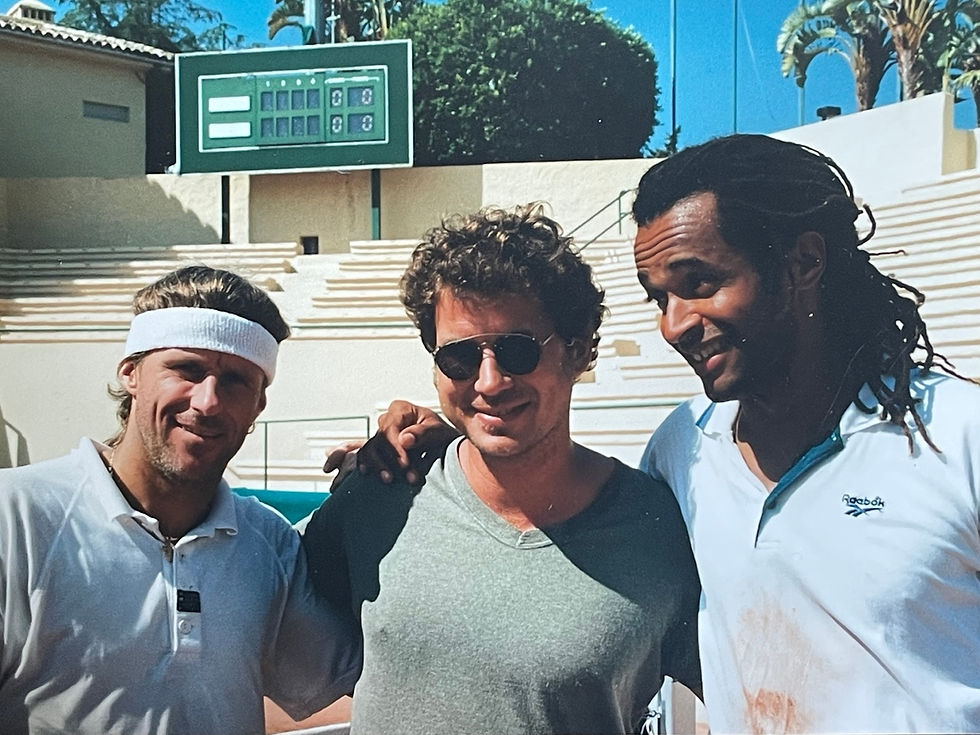
The next few years directing TV commercials were hugely enjoyable. I had the choice of pretty much whatever project I chose to do in the UK and I was making good money. I was also working with a lot of celebrities which made life interesting. I began to win more awards most notably at Cannes, D&AD (Design and Art Direction) and the British Television Advertising awards but I still hadn’t worked in the US. So Lou and I rented a house in Venice Beach and I became a partner in a US production Company. My overriding goal was to direct a Nike campaign which I felt were the most creative commercials in the world. I pitched and lost out many times before winning a Nike baseball campaign. It successfully aired in the US and I went on to direct another 8 campaigns for the sports brand. My final Nike commercial was with Lance Armstrong in which he races against a 40 ton Tanker Truck that ends up crashing into a gorge. We shot this in Southern Spain as they were the only country that would allow us to throw a tanker off a hill side! I used stunt guys from the Bond Movies to orchestrate the stunt. It won an Association of Independent Commercial Producers award, and is archived at MOMA (Museum Of Modern Art) in NYC. That same year I also won a D&AD for a British Army Campaign. During this time I also filmed campaigns for many other big brand names from Pepsi, Mountain Dew, Honda and Mitsubishi to Sony Playstation.
Branching Out
I realised that to stay relevant and to survive as a Director I needed to reinvent myself. I also wanted to spend more time living in the UK. So I decided to change things up, branch out and direct music videos, which were considered hugely creative. My first music video was for Electronic with Johnny Marr from The Smiths and Bernard Sumner from New Order. It was very controversial as it documented a band of thugs fighting and abusing their way around Soho. It was shown as a short film at Edinburgh Film Festival two years running but was banned from MTV. I have since directed a number of music videos for everyone from Jamiroquai to Kasabian. I also continued to shoot commercials and regularly filmed on location in New Zealand, South Africa, Hawaii, Canada, the US and across Europe.
By now I was also keen to direct feature films. I already had a movie agent, CAA (Creative Artists Agency) who look after everyone from Brad Pitt to Spielberg. They persuaded me that I’d have more success being on the ground in LA than living in London. So we moved back to LA, this time with Ollie and Amelia aged 5 and 3, and rented a house in Malibu. Alongside having the most financially successful time of my career I spent the next four years pitching films. The pitch process in LA is fraught with problems. How any films ever get made is a minor miracle! I was the favoured Director on three films that were supposedly ‘green lit’ only for them to fade into oblivion. It was a huge amount of work for no result. Also the financial crash of 2008/9 changed everything. Suddenly the movie execs I’d been speaking to no longer had jobs and the industry shrunk by 50% almost overnight. Thankfully my Commercial and Music Video career continued to flourish!
Staying in the game
During this time I decided I didn’t want to bring up my children in LA, especially after asking an eight year old Ollie where he fancied going for Sunday lunch and he replied Nobu! That was enough for me! So in 2010 we moved back to the UK and bought Lower Highfield Farm. Since then I’ve won another MOMA award for an Audi campaign, directed many other TV commercials and in 2016 was commissioned by EA Sports to develop the script and direct the live action for their “Need for Speed” video game. The ambition was to seamlessly blend live action with computer generated footage to create an immersive authentic experience where the player plays a role with real life characters in each scene. After four months in script development, the shoot took place over two months in various locations around London.

I’ve also completed a feature documentary “Cross Country” following acclaimed sculptor Jon Krawzyck across 18 states from LA to NYC with his 9/11 memorial sculpture strapped to the back of his pick up truck. This proved to be a challenging and controversial project. We interviewed over two thousand people as we crossed America. There was a lot of emotion and some difficult interviews. The editing of such a huge amount of footage took more than a year and I still play with how I could re edit it to make it better! Jon’s sculpture now proudly stands opposite Ground Zero, NYC and my documentary is archived in the 911 Memorial museum at Ground Zero.
After years of filming all over the world I’m increasingly aware of how fast technology is moving. The entire creative world is undergoing a seismic shift with the onset of AI. TV commercials are not the glamorous entity they once were nor is the money in the industry to pay for the kind of huge shoots I was lucky enough to direct. I’m now focusing on more personal film projects. I recently completed a series of short film pieces for a charity championing the work of unpaid carers and am working on a short film Lou and I have developed together. I feel incredibly lucky to have had a career that has never felt like a proper job. I’ve worked to my own schedule, had the luxury of picking and choosing the projects I’ve been involved in and above all I’ve been allowed to play, to create incredible visuals with some of the most talented film professionals on the planet. It’s been an inspiring journey so far, long may it continue!
---------------------------------------------------------------------------------------------------------------------------
A Day in the Life of a Racing Car Driver (September 2025)
By Murray Shepherd
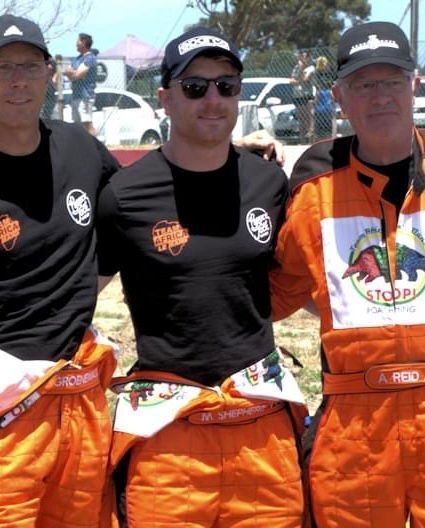
Race Day always starts early. Up at 5.30 and out for a gentle jog around Thursley Common. It’s one of those peaceful morning rituals, nothing too strenuous, just to get the blood moving and the mind focused. Having grown up my whole life here it’s always grounding to start high pressure days here. Today I’m racing at Goodwood, my local track and one I always enjoy being a part of. After the run, I get back to my flat at Thorefields, fire up the coffee machine and while that’s doing its thing I jump into an ice cold shower. The feeling after is great and helps further focus the mind.
Then time to get ready, coffee into a flask, pick up my strategically placed kit bags by the door sothey’re impossible to leave without and head out to my car. I’m lucky enough it’s a Porsche GT4 at the moment. I drop down low into the bucket seat, put on my ‘Race Day’ playlist, a combination of upbeat yet relaxed tunes to create positive vibe for the journey. I start the engine and start the drive towards Goodwood. It’s more than a drive, it’s part of the process. I use the time to dial into the day, feeling the balance of the car and absorbing its feedback. Heel and toe gear changes while keeping my hands relaxed on the wheel. I’m setting the standard of how I operate with relaxed, confident precision.

Now things are flowing and we’re heading South, I think about what’s in store today. It’s Day 2 of Goodwood. I’ve qualified for grid position yesterday and today is race day. I’m racing two separate cars in two separate races. A 1963 AC Cobra owned by Churt resident Malcolm Young run by A J Barnard’s, and our own family’s 1965 Ford Mustang run by Pitch Place resident Simon Blake’s Historic Automobiles. My coffee flask is running low, a perfect time for a pit stop at my usual French cafe, The Midhurst Bakery. In broken French I order a black coffee for me, and a stack of fresh pastries for my clients who have hired Motorhomes from me, staying over at Goodwood. Merci Monsieur, Au revoir! The final stretch towards Goodwood is my favourite part of the drive. The West Sussex roads are fast and flowing, the villages still sleepy, or were at least until I came through! It’s a real joy. Good tunes, coffee flowing, beautiful scenery, fast car. It’s going to be a good day. I can feel it.
When I arrive at Goodwood, I stop in the drivers camp site where my clients are staying in the Motorhomes they hired from me. Everything looks ok, quiet and peaceful with no obvious issues, so I drop the pastries outside each door before parking up my car and walking towards the paddock area, loaded like a Sherpa with kit bags. I firstly call into the drivers’ locker room to drop my bags. Always an experience in itself, rubbing shoulders with F1 drivers and Le Mans 24 Hour winners. Imposter syndrome or what!? I then check in with the teams. The cars look spotless and ready to go. I’m happy to hear the work overnight on the Cobra has gone well to sort out our gremlins from yesterday. As the morning rolls on, the paddock and grand stands starts to fill. I base myself near the Mustang so people can find me easily. Friends, family and familiar faces begin to drop by to say hello. I’ve organised a catch up with so many people I’ve forgotten who, so if I just stay here I should see most people. As the atmosphere builds, familiar faces help keep things grounded. It’s a chance to laugh, chat, and relax a little before things get serious. That calm energy is important. It keeps the nerves at bay.

The first race is in the Mustang. It’s a two-driver, 1 hour race format and I’m sharing the car with Anthony Reid - Goodwood House Captain, Touring Car legend and Le Mans 24 Hour podium finisher. It’s still surreal racing with him - I used to play as him on a video game when I was a kid! Last time we raced together at Goodwood we finished 2nd overall in the Pierpoint Cup and only recently won together out in South Africa. We know each other well and make a good team. We chat through some tactics for the race with the team. Anthony will take the first stint and I’ll finish the race after a driver swap in the pits. We then do driver change practice to make sure everything runs smoothly in the pits. Everything needs to run like clockwork. We both get ready in the locker room and when the time comes we follow our car to the collecting area, which is being pushed by the team. It’s cool walking with Anthony as you get papped all the way, photographs, autographs, the lot! In the collecting area the team strap Anthony in. I shake his hand, say “see you in the pits” as set off on foot. In fact I take a detour to the loo and don’t leave until I hear the roar of the cars starting the race. I then avoid the pit lane, taking a quiet walk instead while listening to the sound of the cars blasting down. Practice what you preach - Nerves are just excitement in disguise! Once the pit window nears opening time I head back to the pits and give the team the signal that I’m ready. I’m told we’re running just outside the top 10 which is further back than we hoped. The pit window opens and the team gives Anthony a signal from the pit wall to come in the following lap.
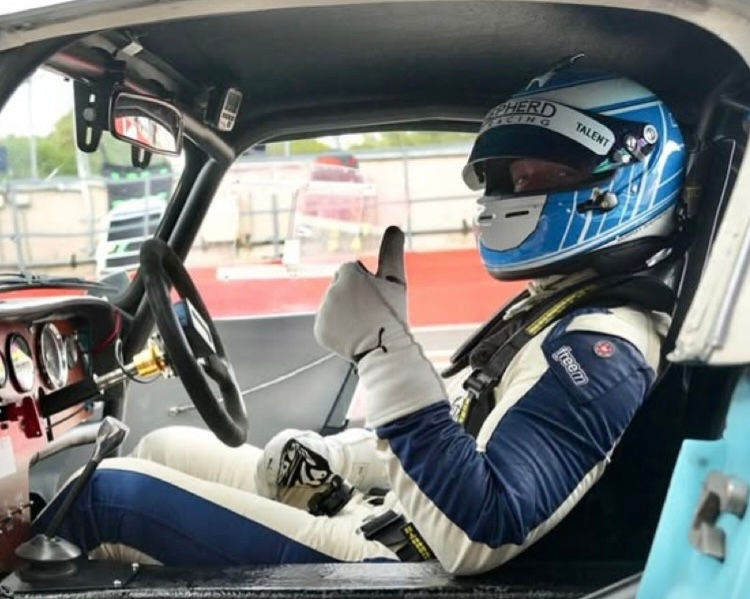
Not a traditional pit board but an orange fuel funnel mounted on a jack handle which the team waves as Anthony drives by. It’s a tradition that works wonders in a sea of similar looking pit boards. I put my helmet and gloves on and ready myself. A few claps of the hands to bring myself into the moment. Anthony dives in to the pits and pulls up. I run around the back of the car to the left side. It’s left-hand drive, so I’ve got to be quick and careful with the narrow space in the pit lane. Big V8’s are storming in and out and it’s easy to get clipped. We swap drivers quickly and as the team strap me in Anthony gives me a quick heads up, “The brakes are fading away badly!” Great...I drop it into first, wait for the signal from the team to go, the V8 roars, and I launch out of the pit lane and onto the track.As I power up through the gears I glance in my left mirror to see this pack of cars right behind, closing fast. They’re all jostling for position and I’ve just come out in front of them. I know they’ll be on me in seconds, so I get my head down and focus on defending. It’s one of those high-pressure moments where you’ve got to stay loose, stay sharp, and trust your instincts. I hold them off as the car dances beneath me. Coming into the first corner after battling hard, I turn in and there’s an almighty bang. I glance over and it’s my cousin, Fred Shepherd, barging through on the inside. I spot him glancing in his mirror, so I give him a friendly backwards V sign! Now it’s time to refocus and bring the car home as highup the order as I can as I struggle with the brakes. At this point I’m throwing the car into the corners to slow it down. I’m pleased to see the chequered flag. I bring it home but no podium finish this time. I roll into Parc Fermé full of clapping spectators. I climb out to be met by my Mum, Sally and David as well as my Aunty Tish who are hanging over the fence waving to get my attention. I’m a little upset I didn’t achieve a better result for us, but there’s barely time to process as there’s not much time until the next race. I take on a vast amount of water, some words of encouragement and slip away back towards the collecting area, pouring water over myself to cool down en route.

AJ Barnard’s team has the Cobra already lined up in its grid position, looking absolutely spot on in gloss black with white racing stripes. I get waved through by the marshals into the heavily guarded collecting area. The owner of the Cobra, Malcolm Young, and his family are all waiting behind the white picket fence to the rear of the car with big smiles, excited to go. But there’s not much time to chat, I’m the only driver not yet strapped into the car. So the team usher me in and begin to strap me in. It’s always bit of a squeeze climbing into a closed cockpit GT car like a Cobra, but once you’re in it’s fairly comfortable. Everything comes nicely to you. The steering wheel is close as is the shifter. All the various knobs and switches are easily accessible. I familiarise myself where everything is. I glance over and we’re next to my Uncle, Bill Shepherd, in another AC Cobra. A car I hadn’t seen since a kid, and one that means a lot to me as I have so many fond memories of my Dad racing it regularly. Sitting alongside it now as a ‘grown up’ makes me a little emotional. Just in time my brother, Ted, kneels beside the drivers door and wishes me luck with a fist bump.
I take a moment to scope out the competition from left to right. Everything from Lightweight Jaguar E-Types to Ferraris 250’s. I try not to ponder the fact that I’m sitting in something worth £2 million, being a pretty average value for this race and we’ll be fighting for position in a few minutes. The marshal gives us the signal to start engines. I fire up the Cobra. It barks into life, clonk into gear and we roll out onto the circuit for the out lap maintaining grid position. I weave gently left to right and roll up into my spot on the starting grid, guided by a marshal. I’m slightly further back than I hoped in 8th position. I’m angled slightly in my box, something I’ve planned to give me a clear run past the car ahead. The cars all around are burbling and snarling, my eyes sting from high octane fuels. Earlier in the day I watched how the marshal drops the Union Jack to start another race, so Iknow their rhythm. I grip the wheel lightly, ‘lazy hands’ my Dad taught me. Stay cool and focus in,bringing the revs up just enough. The flag drops. I slip the clutch to minimise wheel spin. The Cobra squats down and launches forward powered by its American V8 engine. We sail past the car ahead, and the car ahead of that! As we reach the first corner I’m already battling for the lead with endurance racing legend Alex Buncombe. The noise is absolutely feral with V8’s and V12’s bellowing on all sides. The car’s twitching and bouncing around. My arms are working hard at the wheel but things are relatively relaxed in my head. There’san Italian Bizzarini right behind filling the mirrors, and a Lightweight E-Type trying to hang on around the outside. I know exactly how to let the car move to keep the flow. It’s driving on instinct.
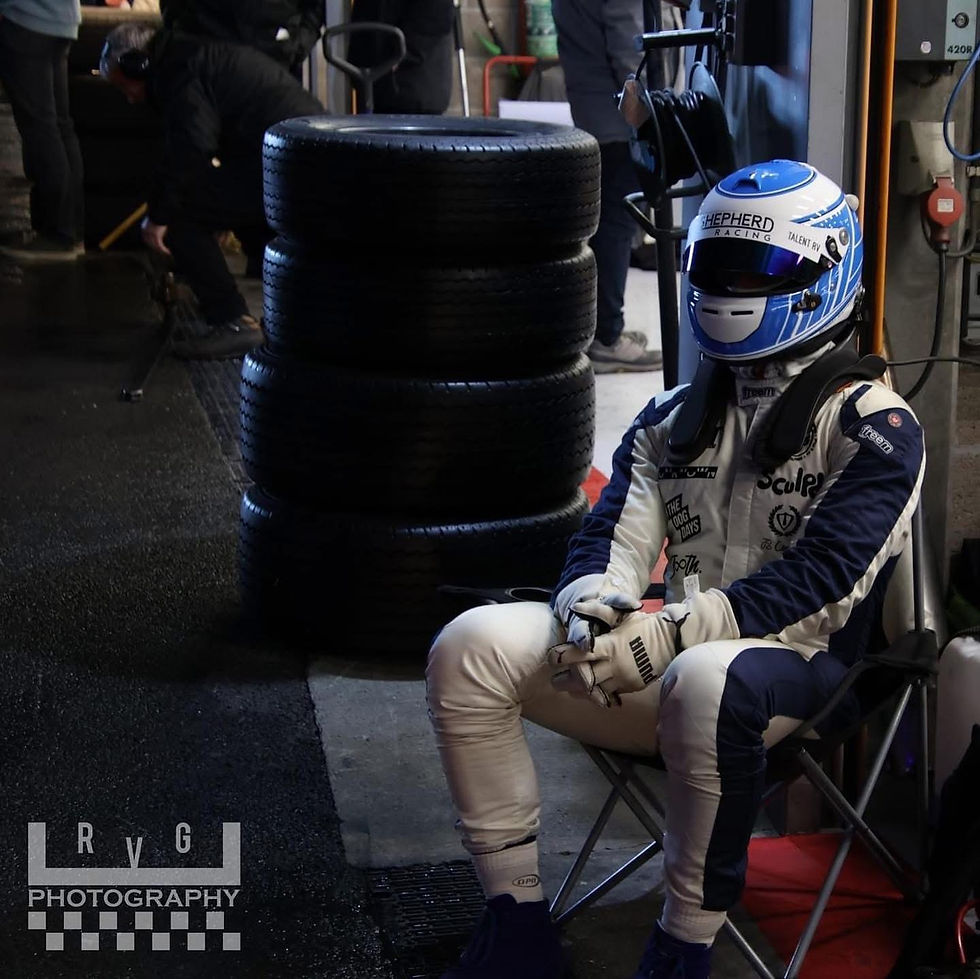
As the race goes on, every corner feels like a battle. I’m either attacking or defending, squeezing every bit of grip out of the tyres. The heavy cobra starts to give up its tyres and brakes earlier than some of the others as I’m locked in a 3 car battle for 3rd position. I’m making the Cobra as wide as possible to make it difficult to pass, but on the final lap a TVR Griffith slips past on the final straight and I take the chequered flag in 4th spot. A little bitter sweet as I wanted a podium for the team and owner. On the in-lap I wave to the crowd who are applauding all around the track. They were loving the fight, and I know we gave them a proper show.
Back in Parc Fermé, I climb out, dripping in sweat and as red as ever to be met by a smiling team, owner, family and friends. They remind me that’s the best result the car’s had at Goodwood and faster than it’s ever been. I can see what it means to them, and that moment right there makes the whole day worth it. The team take the car back to the garage in the paddock. I thank both teams, and catch up with Anthony before slipping to the car park and off back home. Once I get back home, the warm glow of Three Horse Shoes looks most welcoming. A quick refreshment or two with the locals brings everything back down nicely. Then back home and fall into bed.

You win some, you lose some. Ready to do it all again next week at Silverstone!
-------------------------------------------------------------------------------------------------------------------------

